 Custer
 Composite Decking Built for Point Roberts
Point Roberts sits on its own peninsula, surrounded on three sides by the Strait of Georgia and Boundary Bay, which means every deck out there takes weather that a lot of inland Whatcom County homes never see. Salt-laden air comes off the water more or less constantly, driving rain arrives sideways during winter storms with nothing to break it, and shaded, north-facing decks can hold moss and green growth for months at a stretch. A deck built to a generic spec sheet doesn't always account for that combination. One built with this specific exposure in mind does.
We work throughout Custer and the surrounding parts of Whatcom County, and Point Roberts is a regular part of that territory. This page covers what composite decking actually needs to hold up out there, what a correct installation looks like, and how we handle a job in a community that's a little more logistically involved to reach than most.
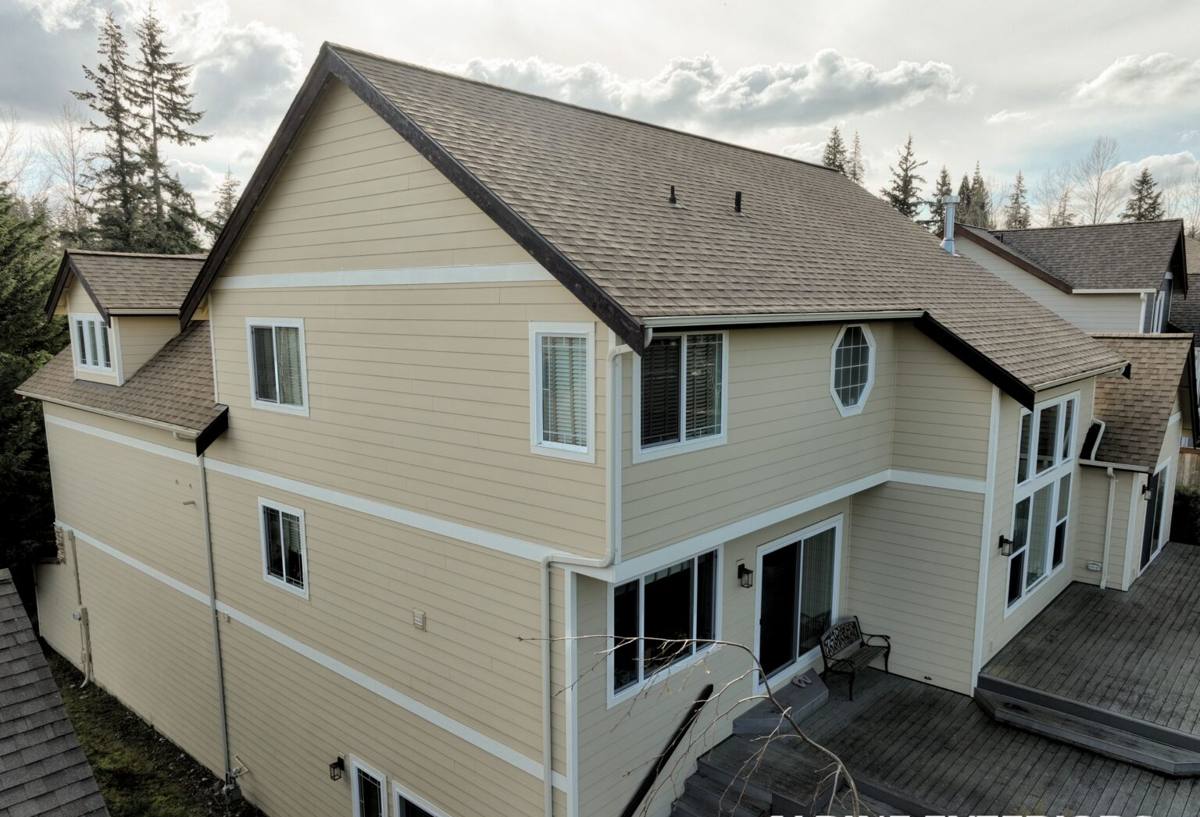
What Point Roberts' Climate Demands From a Deck
Salt Air and Metal Components
Composite boards themselves don't corrode, but every deck has fasteners, joist hangers, brackets, and often a metal or metal-topped railing system holding it together. Salt-bearing marine air accelerates corrosion on anything that isn't rated for it, and that process doesn't announce itself — it works quietly on hardware underneath the deck surface for years before a homeowner sees a problem above. Out here, hardware selection isn't a detail to skip past; it's one of the first things that determines whether a deck is still structurally sound in fifteen years or needs framing repairs in eight.
Driving Rain and Where Water Actually Goes
Composite decking is far more water-tolerant than wood at the board level, but a deck is a system, not just a surface. Water that drives sideways off Boundary Bay during a winter storm still has to go somewhere — off the board, through the gaps, off the substructure, and away from the house. If drainage and slope weren't planned correctly underneath the boards, water pools where it shouldn't, and that's where problems start regardless of what the top surface is made of.
Moss and Shade
Composite decking resists rot in a way wood never will, but it isn't immune to surface growth. Moss, algae, and mildew need moisture and shade to establish, and Point Roberts has a long stretch of the year that offers plenty of both, especially on decks shaded by trees or the north side of a house. Left alone, that growth doesn't damage most composite boards structurally, but it does make the surface slick and, over time, can work into board grooves and fastener channels if it's never cleaned.
Composite vs. Wood for This Exposure
Homeowners often ask us to lay out the real trade-offs rather than just recommend the pricier option. Here's how the two compare specifically for a marine, high-moisture, high-moss site like Point Roberts.
| Factor | Pressure-Treated Wood | Composite Decking |
|---|---|---|
| Moisture behavior | Absorbs water, swells, and can warp or cup with repeated wet-dry cycles | Doesn't absorb water into the board itself; dimensionally stable |
| Rot risk | Real risk over time, especially at fastener holes and board ends | Not susceptible to rot in the way wood is |
| Moss and algae | Grows into the wood grain and holds moisture against the fibers | Grows on the surface only; cleans off without damaging the board |
| Maintenance | Needs periodic sealing or staining to keep water out | Needs periodic washing; no sealing or staining required |
| Upfront cost | Lower material cost | Higher material cost |
| Long-term cost | Ongoing maintenance and earlier replacement in this climate | Lower maintenance, longer service life in high-moisture exposure |
Wood isn't a bad material everywhere, but in a location that stays wet and shaded as long as Point Roberts does through fall, winter, and spring, it asks a homeowner for more upkeep than most people realize when they choose it on price alone.
What a Correct Composite Deck Installation Involves
Framing and Substructure
The composite boards get most of the attention, but the framing underneath is what actually determines whether the deck lasts. We use hardware rated for the exposure a deck will actually see this close to the water — not just what meets a general code minimum — and we set joist spacing to match the specific composite product's span rating, since composite boards flex differently than wood and manufacturers publish exact spacing requirements for a reason.
Fastening Method
Most composite systems today use hidden fastener clips rather than face screws, which gives a cleaner look and avoids putting screw holes through the board's cap layer where water could otherwise find a way in. Getting clip spacing and board gapping right matters more than it looks — too tight and the boards have no room to expand and contract with temperature; too loose and they feel unstable underfoot.
Ventilation and Drainage Underneath
A deck built low to the ground, or over a patio or living space below, needs real airflow and a clear path for water to leave the substructure. We plan that during framing, not after the boards are down, since it's the difference between a deck that dries out between storms and one that stays damp against the joists all winter.
Flashing Where the Deck Meets the House
Ledger board flashing is one of the most common failure points on any deck, wood or composite, and it's especially important here given how much sideways rain the exposed sides of a property can take. Correct flashing keeps water from working its way behind the siding at the exact point where the deck attaches to the house.
Choosing the Right Composite Board for This Exposure
Not all composite decking is built the same way, and the difference matters more in a marine climate than in a dry inland one.
- Capped composite has a protective polymer shell wrapped around a wood-plastic composite core, which resists moisture, staining, and fading far better than older, uncapped composite products.
- Uncapped composite is generally less expensive but more exposed to surface wear, staining, and moisture absorption at cut edges over time — a real consideration on a site with this much rain and salt exposure.
- Color and heat matter too — darker boards run hotter in direct sun and can show scratches and surface debris more readily than mid-tone colors, which is worth weighing for a deck that gets afternoon sun off the water.
- Grooved vs. solid-edge boards affect how the hidden fastener system performs and how well the board sheds water at the edges.
We'll walk through the actual product lines and their warranty terms during an estimate rather than push one brand — the right choice depends on the deck's exposure, budget, and how the homeowner plans to use the space.
Our Process for Point Roberts Projects
Point Roberts is part of our regular service area, but it's also a bit different logistically than a job in Custer proper — it's a U.S. peninsula best reached by road through Canada, which means material deliveries and crew scheduling need to be planned a little further in advance than a typical job. We build that into the estimate and timeline up front so there are no surprises about when work starts or how long it takes once we're on site.
On every composite deck project, our process covers:
- An on-site walkthrough to assess sun exposure, shade patterns, existing framing condition, and drainage around the deck footprint
- A written estimate covering board selection, substructure work, railing and fastening system, and a realistic timeline
- Removal of any failing existing deck structure, with framing inspected and replaced where needed rather than built over
- Installation to the manufacturer's span, fastening, and clearance specifications for the specific board chosen
- A final walkthrough covering care and cleaning specific to the product installed
Maintenance Checklist for Composite Decks in This Climate
Composite decking is genuinely lower-maintenance than wood, but "low-maintenance" isn't "no-maintenance," especially with this much salt air and moss pressure. A few habits go a long way:
- Rinse or wash the deck surface a few times a year to keep salt residue and organic buildup from settling into board grooves
- Clean moss and algae with a soft brush and mild cleaner rather than a pressure washer set too aggressively, which can damage the cap layer on some boards
- Keep gutters and downspouts near the deck clear so runoff doesn't concentrate onto or under the deck surface
- Check railing posts and any metal hardware periodically for early signs of corrosion, especially on the sides most exposed to the water
- Sweep leaves and debris out of board gaps before they trap moisture against the substructure
Why Local Experience in Point Roberts Matters
A deck built to a general spec sheet, without accounting for salt air, driving rain, and a long moss season, tends to show its weak points earlier than it should — corroded hardware, damp substructure, boards that never quite dry out on shaded elevations. We've built and repaired decks throughout this part of Whatcom County long enough to know which details actually matter here versus which ones are just boilerplate from a manufacturer's install guide written for a different climate. That's the difference between a deck that needs attention again in a few years and one that's still solid decades out.
If you're planning a new composite deck or replacing an aging one in Point Roberts, we're glad to come take a look, walk the site with you, and put together a straightforward estimate. Reach out using the form below for a free, no-pressure estimate.