 Custer
 Why Cherry Point Is a Tough Place on Siding
Cherry Point sits close enough to the water that salt-laden air is part of daily weather, not an occasional event. Add Whatcom County's long wet season, wind-driven rain off the Strait, and a moss and mildew season that can stretch eight or nine months out of the year, and you have a set of conditions that will find every weak point in an exterior. Wood siding checks and rots. Vinyl chalks, warps in the sun-facing exposures, and still lets moisture track behind it at the seams. Even siding that looks fine from the road can be failing at the laps, the corners, and the fastener lines where water actually gets in.
None of this is unique to one house on one road — it's the baseline for anything built near this stretch of coastline. The siding that holds up here isn't the siding that looks best in a showroom. It's the siding engineered for exactly this kind of exposure, installed the way the manufacturer actually specifies, not the way it's fastest to install.
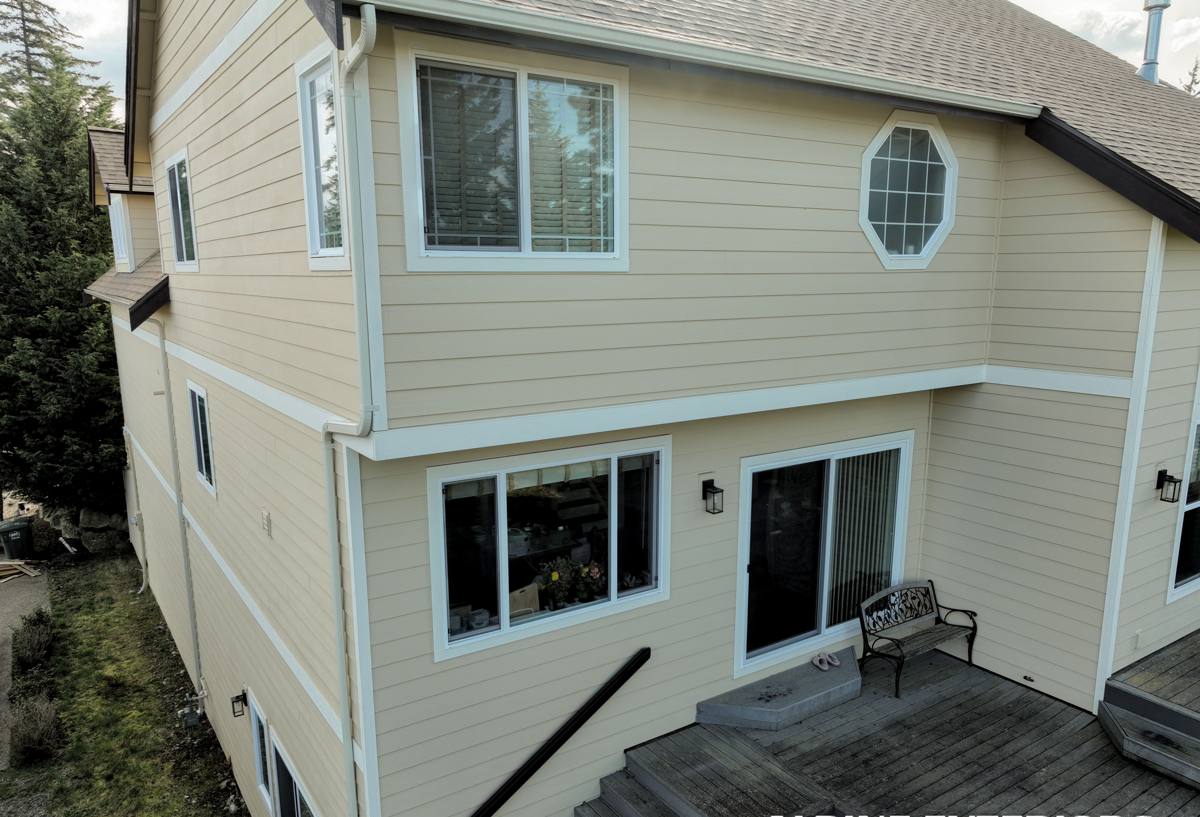
Why We Only Install James Hardie Here
Custer Siding installs James Hardie fiber cement exclusively. We don't carry LP SmartSide, vinyl, Cemplank, Allura, primed spruce, or cedar, and that's a deliberate call, not a limitation of what we're capable of installing. Fiber cement in general handles moisture differently than wood-based or vinyl products, but Hardie's HZ5 formulation is specifically engineered for the wetter, harsher climate zones — which is exactly what Cherry Point sits in. It resists moisture absorption, doesn't feed mold or mildew the way wood-based composites can when a seam fails, and won't warp, crack, or become brittle from the salt-and-freeze cycles this area sees in winter.
The factory-applied ColorPlus finish matters just as much as the substrate. It's baked on under controlled conditions rather than field-applied, which means it resists the fading and chalking that salt air accelerates on ordinary paint. On a house near Cherry Point, that's the difference between a paint job that holds its color for over a decade and one that needs touch-up work in three or four years.
What This Doesn't Mean
We're not going to tell you cedar looks bad or that vinyl always fails — plenty of homes wear both without obvious problems for years. What we will say is that we've made a professional call to stand behind one product system we can install to spec and warranty with confidence, rather than juggling installation methods across five different materials, each with its own moisture behavior and failure points. In an environment like this one, that consistency is worth more than it sounds.
What a Correct Installation Actually Involves
Hardie siding is only as good as the install underneath it. In a salt-air, high-rainfall area, a handful of details separate a job that lasts decades from one that fails at the seams in under ten years:
- Proper weather-resistive barrier and flashing at every window, door, and penetration — this is where the majority of hidden moisture problems start, not in the field of the wall
- Correct fastener type and spacing — stainless or hot-dipped galvanized fasteners hold up far better against salt exposure than standard coated fasteners, which can corrode and stain the face of the board over time
- Manufacturer-specified clearance between the bottom of the siding and grade, decks, patios, and roof lines, so splash-back moisture doesn't sit against the board
- Correctly gapped and caulked joints, sized to the manufacturer's specification rather than caulked tight, which lets the board handle normal expansion without cracking the seal
- Rain-screen or drainage plane detailing where the wall assembly calls for it, so any moisture that does get behind the cladding has somewhere to go
Skip any one of these and you can end up with a wall that looks like a proper Hardie install but behaves like a much cheaper one. This is the part of the job that doesn't show up in a photo but shows up in a home inspection five or ten years down the road.
Our Process for Cherry Point Homes
1. On-Site Assessment
We walk the exterior, check the current siding and sheathing condition, and look specifically at the sides of the house that take the most wind-driven rain and salt exposure — usually the west and southwest faces on homes in this area. We also check existing flashing, trim, and any moisture staining that points to a problem already underway.
2. Removal and Prep
Old siding comes off, sheathing gets inspected for rot or soft spots, and any damaged material gets addressed before anything new goes up. Housewrap and flashing get installed or replaced to current standards — this step gets skipped more often than homeowners realize, and it's the one that matters most in this climate.
3. Installation to Spec
We install to James Hardie's published fastening, clearance, and joint-treatment specifications, not a generic "how siding usually goes on" approach. This is what keeps the manufacturer's warranty intact and what actually gives you the performance the product is designed for.
4. Final Inspection and Walkthrough
We walk the finished job with you, point out anything worth knowing for future maintenance, and make sure trim, caulking, and paint lines are clean before we consider the job done.
Choosing the Right Hardie Product Line
Not every Hardie profile makes sense for every home. Here's how the main options compare for a Cherry Point property:
| Product | Best For | Considerations Near Cherry Point |
|---|---|---|
| HardiePlank Lap Siding | Most single-family homes, traditional or craftsman styles | Most common choice; wide range of exposures and textures; performs well against wind-driven rain when lapped correctly |
| HardiePanel Vertical Siding | Modern designs, accent walls, gables | Fewer horizontal joints than lap siding, which can mean fewer potential water entry points on accent areas |
| HardieShingle | Cottage or shingle-style homes | More labor-intensive install; worth it for the look, but joint detailing matters even more given the smaller board size |
| HardieTrim | Corners, fascia, window and door surrounds | Pairing trim and field siding from the same system avoids mismatched expansion and moisture behavior at transitions |
Cost Factors Homeowners Should Know
Every quote should reflect the actual condition of your walls, not just square footage. The factors that move the price on a Cherry Point home most often are:
| Factor | Why It Matters |
|---|---|
| Sheathing condition | Rot or moisture damage found during tear-off adds repair work before new siding can go on |
| Wall complexity | Multiple gables, dormers, and trim details take more labor and material than a simple rectangular wall |
| Product line and profile | Lap, panel, and shingle styles carry different material and labor costs |
| Height and access | Multi-story sections near the water-facing side often need more scaffolding or lift work |
| Existing siding removal | Tear-off and disposal of old material adds cost versus a bare-sheathing new build |
Maintenance in a Salt Air, High-Moss Climate
Hardie siding is low-maintenance compared to wood or vinyl, but "low" isn't "none," especially this close to the water. A short annual routine keeps a correctly installed job performing the way it should for its full service life:
- Rinse the exterior once or twice a year to clear salt residue and organic buildup before it feeds moss or mildew growth
- Keep gutters clear so overflow doesn't run down the face of the siding repeatedly in the same spot
- Trim back vegetation and tree cover that keeps walls shaded and damp longer than they need to be — this is the single biggest driver of moss growth on siding
- Check caulking at trim and penetrations every couple of years; caulk is a maintenance item even on a product that doesn't need repainting
- Watch for any staining at the base of the wall, which can signal a drainage or clearance issue worth addressing early
Why Local Experience Actually Matters Here
A crew that installs Hardie siding in a dry inland climate and a crew that installs it a short distance from the water are solving different problems, even with identical materials. Flashing detail, fastener choice, and joint spacing all get more critical as salt exposure and rainfall totals go up. A crew that already works homes around Custer and the Cherry Point area knows which walls take the worst of the weather, what the local building department expects on permits and inspections, and which installation shortcuts simply don't hold up in this environment — because we've seen what happens when they don't.
That's not a marketing point. It's the reason two houses with the same siding, installed to the same manufacturer spec, can perform very differently ten years later depending on whether the crew accounted for where the house actually sits.
Getting Started
If you're weighing a siding replacement on a Cherry Point property, we're glad to walk the exterior with you, point out what we see, and put together a straightforward estimate — no pressure, no obligation. Use the form below to get a free estimate started.