 Custer
 New-Construction Windows Are a Different Job Than Window Replacement
A lot of homeowners assume "installing windows" is one trade with one method. On a new build it isn't. Replacement windows go into an opening that's already framed, flashed, and sided — the job is mostly about fitting a new unit into an existing hole without tearing the wall apart. New-construction windows go in before the siding, sometimes before the building is even fully dried in. That means the window itself becomes part of the wall's water management system, not just something dropped into a finished one. The flashing, the weather-resistive barrier, and the window's nailing flange all have to work together as one assembly, because whatever gets built wrong at this stage gets buried behind siding and trim for the next 20-plus years.
In California Creek, that sequencing matters more than in a lot of places. This is a build stage where mistakes are cheap to fix and a maintenance nightmare to fix later.
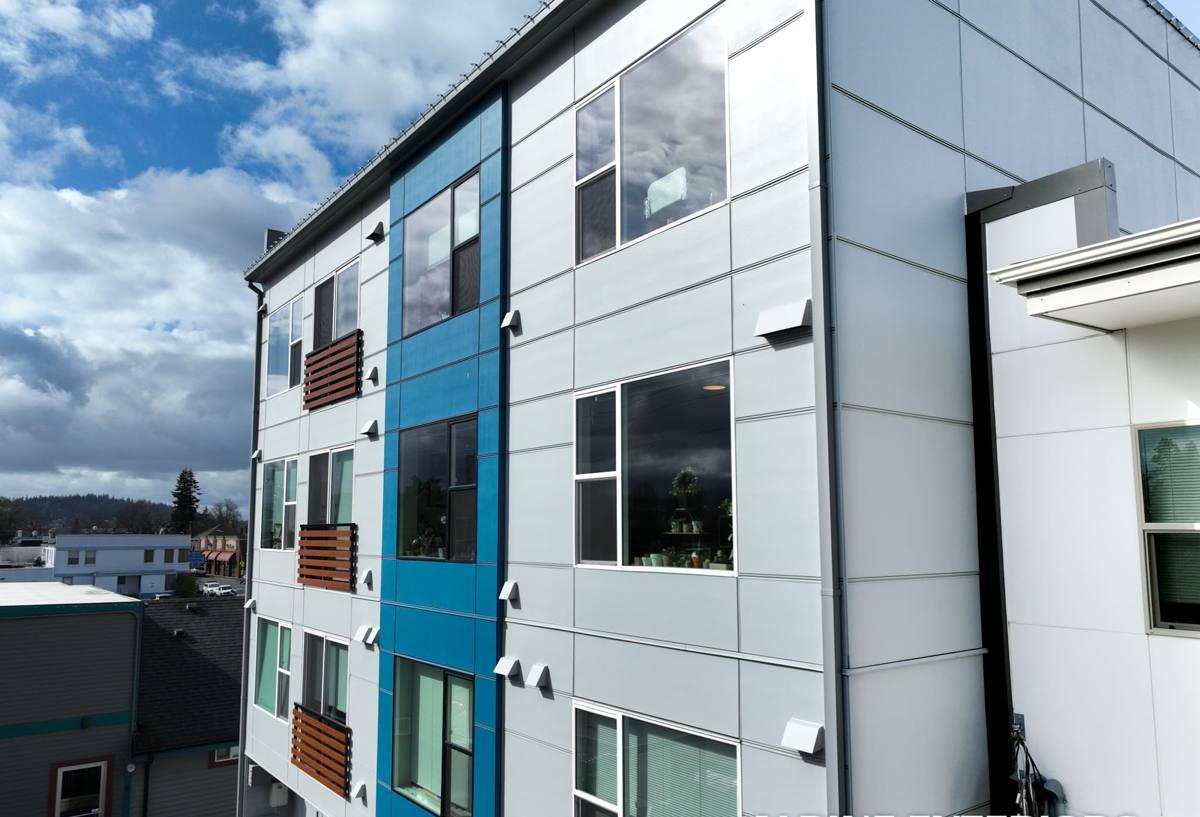
What California Creek's Climate Actually Asks of a Window Opening
Salt Air and Slow Corrosion
Proximity to the water means salt-laden air moving through the area year-round. It doesn't damage a window overnight — it works on unprotected metal fasteners, cheap flashing, and exposed hardware slowly, over years. A window install that ignores this uses the wrong fastener in the wrong place once, and that one spot becomes where the wall starts failing first.
Driving Rain, Not Just Rain
Whatcom County doesn't just get a lot of rain — a good share of it arrives sideways, pushed by wind off the water. A window that's watertight in a light, straight-down shower can still leak under wind-driven rain if the flashing laps and sill pan weren't built to shed water that's moving horizontally, not just falling. This is one of the most common gaps we find in openings that were "installed fast" rather than installed correctly.
A Moss Season That Doesn't Really End
Western Washington's moss season is long, and it's not just a roof and gutter problem. Anywhere moisture sits — a poorly sloped sill, a flashing lap that traps water instead of shedding it — organic growth and slow wood degradation follow. A new-construction window opening built with the right slope and drainage path never gives moss and rot a place to start in the first place.
What a Correct New-Construction Window Installation Involves
The Sill Pan and Sloped Rough Opening
Every opening should have a sloped sill pan flashing that directs any water that gets past the window — and some always will, over time — back out to the exterior instead of into the framing. This is not optional trim work; it's the difference between a window that fails safe and one that rots a wall from the inside where nobody sees it until the siding comes off.
Integrating the Window With the Weather-Resistive Barrier
The house wrap or weather-resistive barrier and the window flashing have to be layered in the correct order — WRB behind, flashing tape lapped over it at the sides and top, so water is always directed down and out, never trapped behind a lap that runs the wrong way. Get this sequence backward and you've built a shingle that catches water instead of shedding it.
Where the Window Meets the Siding
This is the seam a siding contractor cares about that a window-only installer sometimes doesn't: how the window's flange, the flashing, and the siding's own drainage plane tie together. Done right, the siding sheds water past the window without ever depending on caulk as the primary defense. Caulk and sealant are backup, not the plan.
Choosing a Window Built for This Site
Frame material matters more here than in a dry inland climate. Here's how the common options actually compare for a coastal Whatcom County build:
| Frame Material | Moisture Tolerance | Salt Air Behavior | Maintenance |
|---|---|---|---|
| Vinyl | Good — won't rot, some expansion/contraction | Handles it well, no corrosion risk | Low; occasional cleaning |
| Fiberglass | Excellent — very stable, minimal movement | Handles it very well | Low; holds paint/finish longer if colored |
| Wood, Clad Exterior | Good if cladding and seals stay intact | Cladding protects the wood, but any breach exposes bare wood to rot | Higher; failed seals need prompt attention |
| Aluminum | Poor thermal performance, prone to condensation | Needs corrosion-resistant hardware and finish | Moderate; watch fasteners and finish over time |
We don't push one brand on every job — the right call depends on the home's design, budget, and how exposed the opening is to wind and rain. What we won't do is install a window whose warranty or construction assumes a mild, dry climate. Some product lines are built and warrantied around installation practices that don't hold up to sustained wind-driven rain, and we'll tell you honestly when that's the case rather than let a homeowner find out the hard way in year four.
How We Handle a New-Construction Window Install in California Creek
- Rough opening check. We verify the opening is square, level, and sized correctly before a window ever shows up on site — fixing framing problems now is far cheaper than after the window is in.
- Sill pan flashing first. Sloped, sealed at the corners, and tied into the drainage plane before the window sets.
- Window set and shimmed. Plumb, level, and square, with the fastening schedule the manufacturer specifies — not a shortcut version.
- Flashing tape sequence. Sides first, then top, each lap shingled correctly so water only ever moves down and out.
- Tie-in with the weather-resistive barrier and siding plan. This is where we coordinate window and siding work as one system instead of two separate trades that never talk to each other.
- Final check for level, operation, and seal. Every sash opens and closes cleanly and every seam is inspected before we call it done.
Signs a Window Install Wasn't Built for This Climate
If you're reviewing a build in progress, or checking work that's already been covered by siding, here's what to look for or ask about:
- No visible sill pan flashing, or flashing that isn't sloped toward the exterior
- Caulk used as the only line of defense at the flashing laps, rather than as backup
- Flashing tape laps running the wrong direction (top piece under the side pieces instead of over)
- Fasteners that aren't rated for exterior or coastal exposure
- Gaps between window flange and weather-resistive barrier left unsealed
- Windows set out of square or shimmed unevenly, causing binding or forced seals
Cost Factors on a New-Construction Window Job
Pricing on a job like this depends on real variables, not a flat per-window number. Broadly:
| Factor | Why It Moves the Price |
|---|---|
| Window size and count | Larger openings and more units mean more flashing detail and labor, not just more glass |
| Frame material | Fiberglass and quality clad-wood cost more upfront than vinyl but ask less in long-term maintenance |
| Wall height and access | Second-story and hard-to-reach openings take longer to flash and set correctly |
| Exposure of the elevation | Walls that take the brunt of wind-driven rain off the water often warrant extra flashing detail |
| Coordination with siding trade | Doing windows and siding as one planned sequence, rather than two disconnected jobs, usually saves rework |
We'll always walk the specific plans with you and give a real number for the actual job — not a guess based on square footage alone.
Why Hiring a Crew That Already Works California Creek Matters
Building codes set the minimum. What actually keeps a window opening dry for decades in this specific location is judgment built from doing this work, on this coastline, in this weather, repeatedly. A crew that's flashed openings through a Whatcom County winter knows where wind-driven rain actually hits hardest on a given elevation, how long the moss season really runs, and which shortcuts show up as callbacks two or three years later — not because a manual told them, but because they've opened up walls and seen it. That's the difference between a window install that meets code and one that's actually built for California Creek.
After the Windows Are In: What Ongoing Care Looks Like
A correctly installed new-construction window doesn't need much — that's the point of doing it right the first time. Rinse accumulated salt film off exterior surfaces and hardware periodically, keep an eye on caulk lines at trim (not the flashing itself, which should be doing the real work), and clear any debris or moss buildup from sills and nearby trim before it holds moisture against the wall. None of that is a substitute for a correct install; it's just upkeep on top of one.
If you're planning a new build or an addition in California Creek and want windows that are actually built for this coastline — not just installed to pass inspection — we're happy to walk the plans with you. Reach out for a free, no-pressure estimate using the form below.