 Custer
 Building a Deck That Actually Holds Up in California Creek
A deck in California Creek doesn't live an easy life. It sits low to the ground, catches whatever the sky sends off the water, and spends a good chunk of the year damp instead of dry. That combination — salt-tinged air, driving rain coming in sideways off exposed lots, and a moss season that can run from fall clear into spring — is different from what a deck in a drier inland climate has to survive. A deck built without that in mind might look fine for a year or two and then start showing problems: soft spots, black streaking, corroded hardware, boards that cup or split. A deck built for this specific area, on the other hand, can go decades with nothing more than routine cleaning and the occasional board replacement.
This page is about that second kind of deck — what it takes to build one correctly for a California Creek property, what our process looks like, and why the details matter more here than they would somewhere with a milder, drier climate.
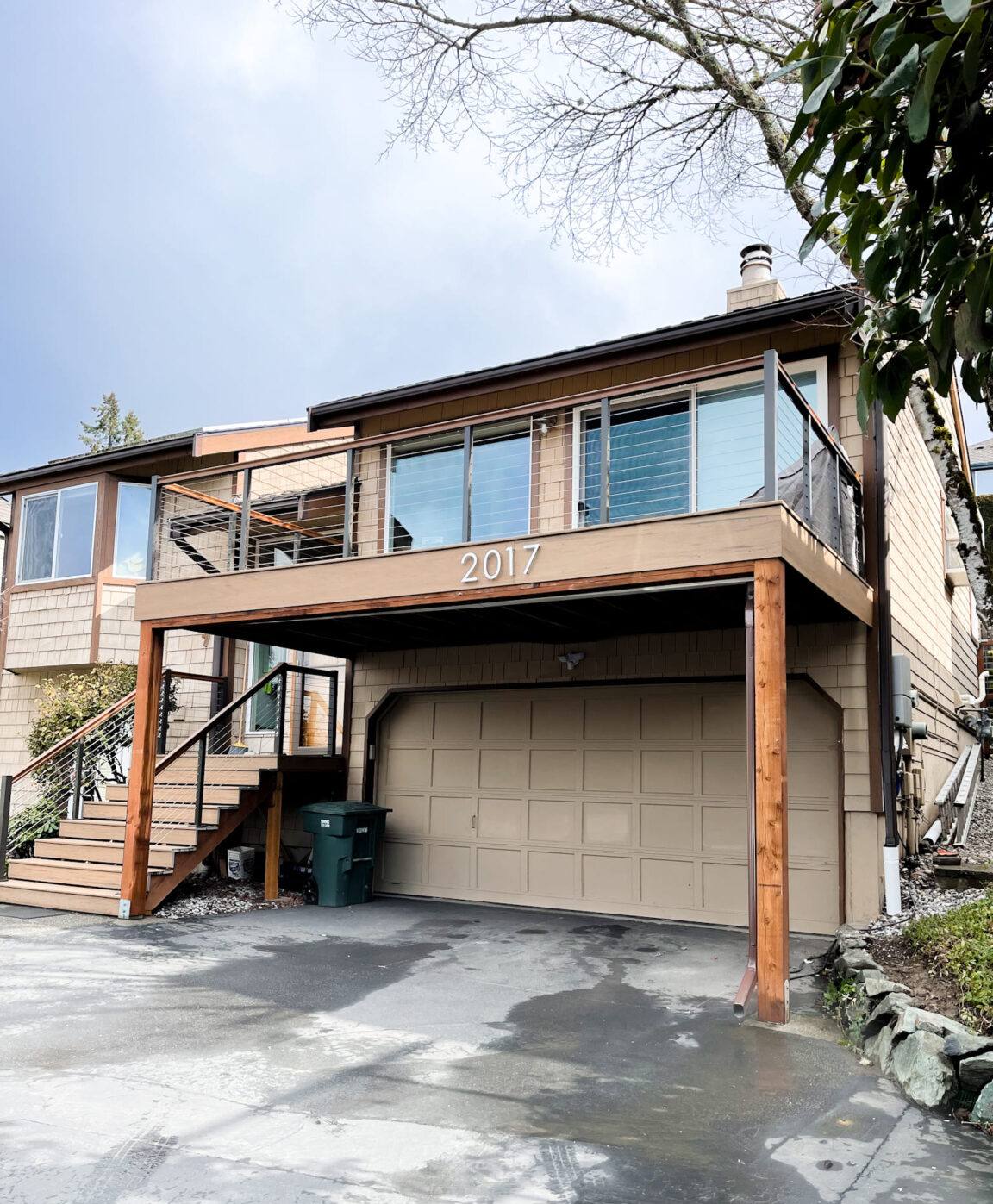
What Salt Air, Rain, and Moss Actually Do to a Deck
Salt-laden air
Properties near tidal water and open water frontage in this part of Whatcom County get a steady dose of salt-carrying moisture in the air, even on days without rain. Over time that salt film accelerates corrosion on anything metal — nails, screws, joist hangers, bolts, and railing hardware. Standard zinc-coated fasteners that would be fine 20 miles inland can start rusting within a few seasons this close to the water. Once a fastener corrodes, it loses holding strength long before it looks obviously bad, which is part of why deck failures near the coast are often a hardware problem hiding under sound-looking wood.
Driving rain
Custer doesn't get the heaviest rainfall totals in Western Washington, but it gets a lot of wind-driven rain that hits decks at an angle instead of falling straight down. That matters because it pushes water into joints, under flashing, and behind ledger boards that a straight-down rain would never reach. A deck ledger board that isn't flashed correctly is one of the most common places we find hidden rot on older decks in this area — the surface boards look fine while the framing behind them has been absorbing water for years.
A long moss season
Cool, damp, and often overcast for long stretches — that's exactly the environment moss and algae need. On a deck, moss doesn't just look bad. It holds moisture against the wood surface, blocks airflow, and turns boards slick and dangerous underfoot. Once moss gets established in the grain of a wood deck board, it's very difficult to fully remove without damaging the wood, and it will keep coming back every wet season unless the deck was built with drainage and airflow in mind from the start.
Choosing the Right Decking Material for This Microclimate
There's no single "best" decking material for every homeowner — it depends on budget, maintenance tolerance, and how the deck will be used. But some materials are a clearly better fit for a damp, salt-exposed, moss-prone site than others.
| Material | How it handles this climate | Maintenance |
|---|---|---|
| Pressure-treated wood | Affordable and strong, but needs consistent sealing to resist moisture and moss; end grain and cut edges are the weak points | Annual cleaning and re-sealing recommended |
| Cedar | Naturally more rot- and insect-resistant than most softwoods, and takes stain well; still absorbs moisture if left unsealed | Periodic cleaning and re-staining |
| Traditional composite | Resists rot completely; some earlier-generation composites can still hold surface moisture and grow mold or moss on the top layer | Occasional washing; no sealing needed |
| Capped composite / PVC | A fully sealed outer shell resists moisture absorption, staining, and moss the best of the common options | Low — mostly rinsing off debris and pollen |
For a lot with real salt and moisture exposure, we generally steer homeowners toward capped composite or well-sealed cedar for the decking surface, paired with corrosion-resistant hardware underneath regardless of what's on top. Wood is still a fine choice for homeowners who like the look and don't mind the upkeep — the key is being honest about what that upkeep actually requires in this climate before you commit to it.
What's Underneath Matters as Much as What's on Top
Most of the decking material comparisons homeowners see focus on the boards you walk on. But a deck's long-term durability here is decided mostly by what's underneath, where it's harder to inspect and easier to build wrong.
- Ledger attachment and flashing: The ledger board where the deck attaches to the house needs proper flashing to keep wind-driven rain from tracking behind it into the house's wall framing — a common source of hidden rot if it's skipped or done poorly.
- Footings sized for local soil: Soil conditions near creek and tidal areas can be softer or more saturated seasonally than inland lots, which affects how deep and how wide footings need to be to stay stable over time.
- Joist hangers and fasteners: Stainless steel or heavy hot-dip galvanized hardware rated for coastal/ground-contact use, not the standard-grade hardware that's fine in a drier inland climate.
- Airflow under the deck: Proper joist spacing and ground clearance let air move underneath, which speeds drying after rain and slows both rot and moss growth on the underside of the boards.
- Board spacing and drainage: Gapping between deck boards needs to be enough to let water drain through rather than pool and sit, which is one of the biggest factors in how much moss a deck grows.
None of this is visible once the deck is finished, which is exactly why it's worth asking a contractor to walk you through it before the build starts, not after.
Our Process for a California Creek Deck Project
1. On-site assessment
We look at the specific lot — sun and wind exposure, drainage patterns, proximity to water, existing structure if it's a rebuild — because those factors change the right approach more than a generic deck plan would account for.
2. Design and material selection
We walk through decking material, railing style, and layout options with the tradeoffs laid out honestly: what looks best, what costs less up front, and what will actually hold up here with the least maintenance over time.
3. Permitting
We handle the permit application through Whatcom County, including any additional review that applies to lots near shoreline or critical areas, so you're not left figuring out the paperwork yourself.
4. Framing and structural build
Footings, ledger flashing, framing, and hardware come first — this is the stage that determines whether the deck is still solid in fifteen years, and it's the stage we spend the most care on.
5. Decking, railing, and finish work
Surface materials go down with attention to drainage gaps and fastening method, followed by railing, stairs, and any finish or sealant work the material calls for.
6. Final walkthrough
We go over the finished deck with you, explain what maintenance it needs and on what schedule, and make sure you know what to watch for as the seasons change.
Permits, Setbacks, and Building Near Water
Most new decks and significant deck replacements require a building permit through Whatcom County, and lots near shoreline, wetlands, or other critical areas can carry additional setback or review requirements. This isn't a formality to skip — an unpermitted deck can create real problems at resale, and setback violations near water are typically taken seriously by the county. We handle this as part of the project rather than treating it as the homeowner's problem to sort out separately.
Keeping a California Creek Deck Ahead of Moss and Moisture
Even a well-built deck needs some seasonal attention in this climate. The good news is that the maintenance is straightforward if you stay ahead of it rather than waiting until moss or staining is already established.
- Sweep debris (leaves, needles, pollen) off the deck regularly — trapped organic matter is what moss and algae feed on first
- Clean the deck surface at least once a year with a deck-safe cleaner, more often on shaded or north-facing areas that stay damp longer
- Check and clear the gaps between boards so water keeps draining rather than pooling
- Inspect railing posts and fastener heads once a year for early rust or corrosion, especially closer to the water
- Re-seal or re-stain wood decking on the schedule the product calls for — don't wait for it to look obviously weathered
- Trim back vegetation that shades the deck or blocks airflow underneath it
What a Custom Deck Project Typically Costs
Cost depends heavily on size, material, height off the ground, and railing/stair complexity, so any number without a site visit is a rough guide at best. Broadly, homeowners in this area should expect a range something like this:
| Project type | General range | Main cost drivers |
|---|---|---|
| Small ground-level deck | Lower end of the market | Size, basic railing, pressure-treated decking |
| Mid-size elevated deck | Moderate | Footing depth, stairs, upgraded decking material |
| Large or multi-level deck | Higher end | Structural complexity, premium decking, custom railing |
Material choice alone can shift the price significantly — capped composite and PVC decking cost more up front than pressure-treated wood but usually cost less over the life of the deck once you factor in sealing, staining, and moss remediation on the wood option.
Why Hiring a Crew That Already Works California Creek Matters
A contractor who mostly builds decks in drier inland areas can still build a structurally sound deck — but they may not default to coastal-grade hardware, proper ledger flashing for wind-driven rain, or board spacing tuned for a long moss season, because those aren't things their usual jobs demand. A crew that already works this specific area builds those details in as standard practice, not as an upsell, because we've seen what happens to decks here that skip them. We also already know the local permitting process and the practical realities of building close to water, which keeps the project moving instead of stalling on paperwork surprises.
If you're planning a new deck or replacing one that's showing its age, we're happy to come take a look and put together a free, no-pressure estimate — just fill out the form below.