 Custer
 Board & Batten Siding for Lynden Homes
Lynden's mix of farmhouses, newer construction on larger lots, and in-town homes near the core of the community has made board and batten one of the most requested siding profiles in this part of Whatcom County. The vertical lines read as clean and modern on newer builds, and as classic and agricultural on older farmhouse-style homes — which is part of why it fits Lynden so well. But board and batten is also one of the least forgiving siding profiles to get wrong. The battens create dozens of extra seams and fastening points compared to a lap siding job, and every one of those seams is a potential path for water. In a climate like this one, that detail matters more than the look does.
This page covers what board and batten actually is, what correct installation requires, and why we only install it in James Hardie fiber cement — not vinyl, not wood, not LP SmartSide — on homes in and around Lynden and Custer.
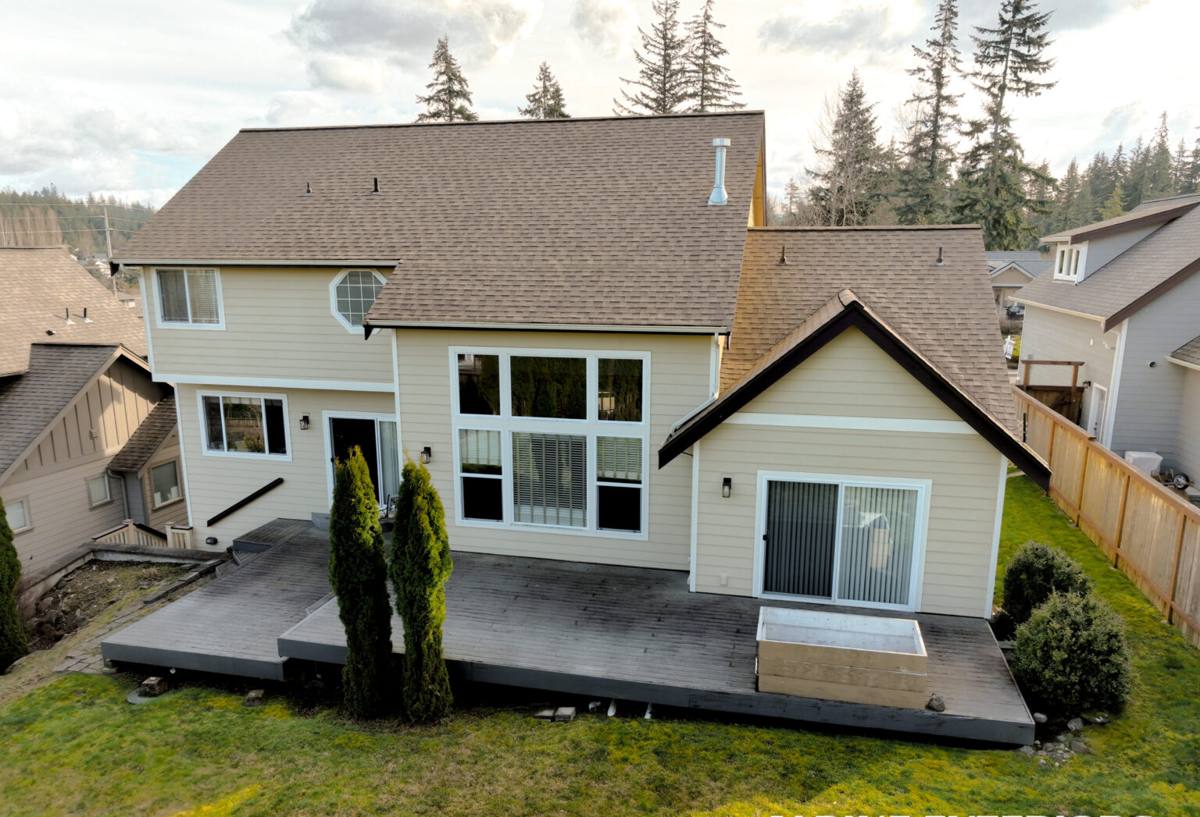
What Board & Batten Siding Actually Is
Board and batten is a vertical siding pattern built from wide flat panels (the "boards") with narrower strips (the "battens") installed over the seams between them. The result is a rhythm of raised vertical lines running up the wall. It's one of the oldest siding styles in North America, originally developed as a practical way to cover gaps between vertical wood planks on barns and early homes — the battens weren't decorative first, they were functional.
In modern fiber cement construction, the system usually means:
- Large-format vertical panels (commonly James Hardie's HardiePanel vertical siding) installed over a properly prepared wall
- Vertical batten strips fastened over each panel seam, spaced to a consistent pattern
- A drainage plane and rainscreen gap behind the panels so any water that gets past the surface has somewhere to go
- Factory-applied finish (ColorPlus) so the color goes on before the panels ever reach the jobsite
Done right, it's a durable, low-maintenance system. Done with shortcuts — no rainscreen, inconsistent batten spacing, field-cut and field-painted edges — it's a siding style that traps water behind a beautiful-looking wall.
Whatcom County's Climate Is Hard on Vertical Siding Specifically
Board and batten has more seams per square foot than any other common siding profile, and Whatcom County's climate is not gentle on seams. Three factors matter most for a Lynden installation:
Salt Air
Proximity to the Salish Sea and Strait of Georgia means homes throughout this part of Whatcom County are exposed to salt-laden air more than most inland Washington communities realize. Salt accelerates corrosion on fasteners and metal flashing, and it degrades poor-quality paint finishes faster than plain moisture does. Every exposed fastener head and every batten edge on a board and batten wall is a spot where that corrosion process can start.
Driving Rain
Storms off the water don't just drop rain — they push it sideways into walls under wind pressure. Vertical battens can actually help shed driving rain when they're installed correctly, because water runs straight down the face instead of pooling in a horizontal lap. But that only works if the panel-to-batten overlap and the flashing details behind it are done to spec. A batten installed flush with no gap, or with the wrong nailing pattern, gives wind-driven rain a direct path behind the panel instead of down it.
A Long Moss Season
Western Washington's moss season runs most of the year, and vertical seams and batten shadows are exactly the kind of low-airflow, slow-to-dry surface that moss and algae colonize first. On board and batten walls specifically, moss tends to establish first in the shaded side of each batten and along the bottom edge of panels — areas that don't get direct sun or wind to dry them out. A rainscreen gap behind the siding, which keeps the wall assembly ventilated, is one of the best defenses against this, and it's a detail that's easy to skip and impossible to see once the siding is up.
Why We Only Install James Hardie for Board & Batten
Vinyl board and batten exists, and it's inexpensive. But vinyl panels expand and contract more than fiber cement across temperature swings, and that movement is more visible on a pattern built from straight vertical lines than it is on horizontal lap siding — waviness and gapping at the battens shows. Vinyl also isn't a fire-rated product, which matters increasingly to insurers and to buyers in this region.
Wood board and batten — cedar or primed spruce — is the traditional choice and it does look the part. But real wood in a marine, high-moss climate means an ongoing maintenance commitment: repainting or re-staining on a real schedule, checking for rot at the battens and panel bottoms, and accepting that untreated end grain at every seam is a moisture entry point that needs watching for the life of the siding.
LP SmartSide is engineered wood, which handles moisture better than raw lumber, but it's still a wood-based product with a resin binder — it's not immune to the same edge-swelling and moisture-related warranty issues that affect engineered wood siding generally in wet climates.
James Hardie fiber cement is cement, sand, and cellulose fiber — it doesn't rot, it isn't a food source for moss or algae the way wood or wood-based products can be, and it's non-combustible. The ColorPlus factory finish is baked on under controlled conditions, so the color and the substrate cure together — that's a meaningfully more durable bond than a field-applied coat of paint on wood or vinyl. For a siding profile with this many exposed seams and edges, we want the base material to be the most stable, least moisture-sensitive option available, and that's fiber cement.
What a Correct Board & Batten Job Involves
The visible part of board and batten — panels and battens — is maybe half the job. The parts that determine whether it lasts are underneath:
Wall Preparation and Drainage Plane
A weather-resistant barrier goes on the sheathing first, lapped correctly at every seam and around every opening. Behind the siding itself, furring strips or a manufactured rainscreen product create a gap that lets bulk water drain and lets the wall assembly dry from both sides instead of trapping moisture against the sheathing.
Flashing at Every Penetration
Windows, doors, hose bibs, light fixtures, vents — every place something interrupts the siding needs flashing detailed to shed water outward, not into the wall. On a vertical profile, this also includes proper flashing at the base of the wall and at any horizontal transitions (like a water table or belt course), since those are the spots where vertical siding meets a horizontal element.
Panel and Batten Fastening
James Hardie specifies fastener type, spacing, and edge distance for HardiePanel installations, and following that spec is what keeps panels secure through wind events and keeps fastener heads from becoming rust points down the line. Battens need consistent spacing and correct fastening into structural framing or blocking behind the panel seam, not just into the panel face.
Field Cuts and Caulking
Any panel cut on site exposes raw substrate that needs to be sealed per Hardie's installation instructions before it's covered. Caulking at trim and openings needs to be a paintable, flexible sealant rated for the exposure — not a cosmetic afterthought.
| Material | How It Handles Whatcom County's Climate | Maintenance Reality |
|---|---|---|
| James Hardie fiber cement | Non-combustible, doesn't rot, factory finish resists salt air and moss better than field-applied coatings | Periodic washing; repaint only if ever desired, not required for protection |
| Cedar / primed spruce | Traditional look but wood is a moss/algae substrate and moves with moisture | Repainting or restaining on a real schedule; watch for rot at seams |
| LP SmartSide | Better than raw wood but still a wood-based, resin-bound product | Edge sealing and moisture vigilance, especially at cut ends |
| Vinyl board & batten | Expands/contracts visibly on a straight-line vertical pattern; not fire-rated | Low maintenance but limited lifespan and repair options if damaged |
Our Process on a Lynden Board & Batten Project
We start with a site walk to look at wall orientation, existing moisture damage, and how much sun and wind exposure different sides of the house get — that changes how aggressive the moss and mildew risk is on each elevation. From there we spec the wall assembly (weather barrier, rainscreen approach), the HardiePanel and batten layout, and the color, then remove the old siding and inspect the sheathing before anything new goes up. Any sheathing damage gets addressed before siding starts, not covered over. Installation follows James Hardie's published fastening and clearance specifications, and we finish with a walkthrough so you know exactly what was installed and what the warranty covers.
Simple Homeowner Checklist Before You Start a Board & Batten Project
- Ask what's happening behind the panels — rainscreen gap or direct-to-sheathing installation
- Confirm the batten spacing and fastening pattern will follow the manufacturer's written installation instructions, not a generic approach
- Get the ColorPlus warranty terms in writing, including whether it's transferable to a future buyer
- Ask how flashing will be handled at windows, doors, and the base of the wall
- Confirm ground clearance — Hardie specifies minimum clearance from grade, decks, and roof lines, and this is easy to shortcut
Why Hiring a Crew That Already Works in Lynden Matters
Board and batten hides installation mistakes well for the first year or two — it looks sharp going up regardless of what's behind it. The problems show up later, and by then they're expensive to fix because they're behind finished siding. A crew that already installs in Whatcom County has seen how salt air, driving rain, and a long moss season actually play out on vertical seams over several years, not just in a manufacturer's spec sheet. That experience shows up in small decisions — where to add extra flashing, how tight to run batten spacing on a shaded north wall versus a sun-exposed south wall — that a crew unfamiliar with this specific climate might not think to make.
If you're weighing board and batten for a home in Lynden or elsewhere around Custer, we're glad to walk the property, talk through what a correct installation looks like for your specific exposure, and give you a straightforward, no-pressure estimate.