 Custer
 Why Blaine Homes Need a Different Approach to Window Replacement
Blaine sits right on the water at the northern edge of Whatcom County, and that location shapes what a window has to survive here. Salt-laden air off Semiahmoo Bay and Drayton Harbor works on metal hardware and fasteners year-round, not just during storms. Driving rain off the Strait of Georgia comes in sideways more often than it falls straight down, which puts real pressure on flashing details that a calmer inland install would never see tested. And then there's moss season — the long stretch from fall through spring when north-facing walls, trim, and sills stay damp for weeks at a time. A window that's "fine" in a drier part of the state can fail early here if it wasn't detailed for this specific combination of salt, wind-driven rain, and sustained moisture.
That's the lens we use on every Blaine window job: not just "does it look good and seal tight," but "will this frame, this hardware, and this flashing still be doing their job in fifteen years of this specific coastline's weather."
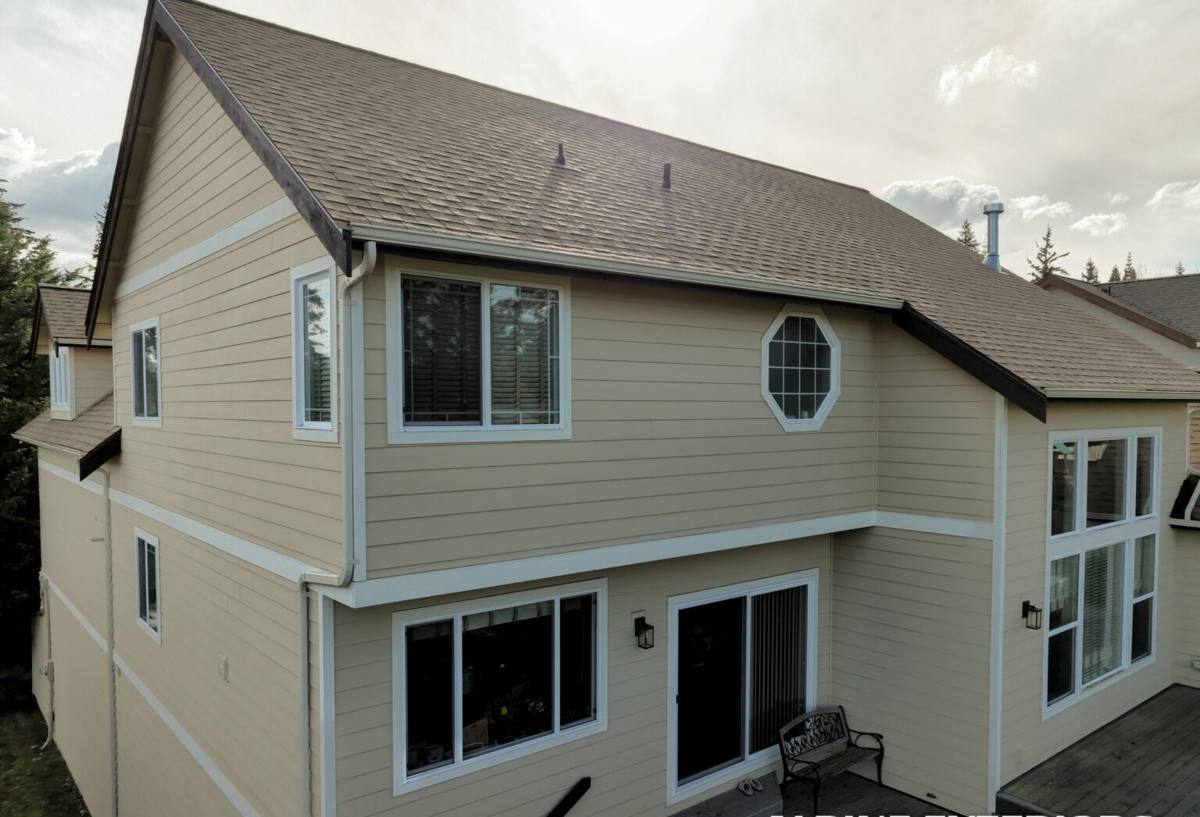
What a Correct Window Replacement Actually Involves
Full-frame versus insert replacement
An insert (or "pocket") replacement drops a new window into the existing frame and is faster and less invasive — it's a reasonable choice when the old frame is still square, dry, and free of rot. A full-frame replacement removes everything down to the rough opening, which is the only way to actually inspect and fix what's happening behind the trim. On a coastal Whatcom County home, especially one that's had any history of leaks or visible moss growth around the openings, we don't recommend an insert until we've confirmed the framing underneath is sound. Covering up hidden rot with a new window on top of it just delays a bigger repair.
Flashing and the sill pan
This is the part of the job that determines whether a window lasts five years or thirty, and it's also the part that's invisible once the trim goes back on. A correct install includes a sloped sill pan so any water that gets past the glass drains back outside instead of pooling on the sill, plus head flashing and side flashing that integrate with the home's existing water-resistive barrier in the right shingle-lap order — water always sheds over the layer below it, never under. On a home taking direct driving rain off the water, skipping or shortcutting this step is the single most common cause of rot we find when we open up an older window.
Sealing and insulating the gap
The gap between the new window frame and the rough opening needs low-expansion foam or backer rod and sealant — not just caulk smeared around the trim. Overfilled gaps can bow a frame out of square; underfilled ones leave a cold, drafty gap that also gives moisture a path inward. Getting this step right is routine for a crew that does it every week; it's the step most often rushed on a one-off job.
Choosing a Frame Material for a Coastal Whatcom County Home
Material choice matters more here than it does twenty miles inland, mainly because of how each option handles salt air and constant moisture exposure.
| Frame Material | Salt Air / Moisture Behavior | Maintenance | Best Fit |
|---|---|---|---|
| Vinyl | Won't corrode or rot; performs well in salt air | Low — occasional cleaning | Most Blaine homes, especially budget-conscious full replacements |
| Fiberglass | Excellent — dimensionally stable, resists moisture and salt exposure | Low | Larger openings, homes prioritizing longevity over upfront cost |
| Wood-clad | Good if cladding is intact; exposed wood or damaged cladding invites rot in this climate | Moderate to high | Homes wanting a wood interior look, away from direct salt spray |
| Bare aluminum | Poor — prone to pitting and corrosion in salt air over time | High | Generally not our first recommendation this close to the water |
We're not against aluminum or wood as materials in general — they have real uses. But our professional standard for a Blaine install leans toward vinyl or fiberglass specifically because of the maintenance burden and moisture behavior we've seen play out on this stretch of coast, not because any one product is inherently bad.
Glass and Energy Performance for a Marine Climate
Whatcom County's marine climate means mild temperatures but near-constant humidity, which changes what matters most in a window's glass package. Low-E coatings help control heat loss through our long gray winters, and a low U-factor (the rate heat moves through the window — lower is better) keeps energy bills and interior condensation down. Argon or krypton gas fill between panes adds a bit more performance but isn't essential on every job.
One distinction worth knowing before you shop: fogging that shows up between the panes means the seal has failed and gas has escaped — that's a manufacturing or install-age issue, not something you can wipe away, and it means the insulated glass unit needs replacing. Condensation on the interior face of the glass, on the other hand, is usually a humidity and ventilation issue inside the home, not a window defect. Knowing which one you're looking at saves a lot of confusion when troubleshooting an older window.
Signs Your Current Windows Are Losing the Battle With the Coast
- Visible pitting, chalky residue, or corrosion on aluminum frames or hardware
- Soft or discolored trim and sill areas, especially on walls facing the water or prevailing wind
- Moss or dark streaking building up around the window opening faster than on the rest of the wall
- Fogging or haze permanently trapped between the panes
- Windows that are noticeably harder to open, close, or lock than they used to be
- Noticeable drafts or a cold spot near the window even with it fully closed
- Condensation pooling on the sill during the wetter months
Any one of these on its own isn't necessarily an emergency, but a home showing several of them together is usually further along than it looks from outside.
How We Handle a Blaine Window Replacement
- On-site assessment — we look at the existing frames, flashing, and any signs of hidden moisture, not just the glass
- Measurement and material selection, matched to the wall's sun and wind-rain exposure
- Scheduling around the weather window rather than forcing an install during a heavy rain stretch
- Careful removal, with an honest look at what's behind the old trim before anything new goes in
- Correct flashing, sill pan, and insulated gap installation — the part that determines long-term performance
- Trim, caulking, and cleanup, followed by a walkthrough so you know how the new windows operate and what to watch for
Why a Crew That Already Works Blaine Matters
A lot of what makes a window installation hold up here isn't exotic — it's judgment built from doing this specific job, in this specific weather, over and over. A crew based out of Custer that regularly works Blaine already knows which walls take the worst of the driving rain, which older homes in the area tend to have flashing that was never detailed correctly the first time, and how to read the local permitting requirements without treating it as a first-time guess. That familiarity shows up in fewer surprises once the old windows come off the wall, and in material choices that are already informed by what actually holds up on this coastline rather than a generic recommendation pulled from a manufacturer's brochure.
What Drives the Cost of a Window Replacement Project
Every home is different, but the same handful of factors move the price up or down on most Blaine projects.
| Factor | Why It Affects Cost |
|---|---|
| Full-frame vs. insert replacement | Full-frame involves more labor but addresses hidden rot or flashing issues |
| Frame material | Vinyl, fiberglass, and wood-clad carry different material costs and labor needs |
| Number and size of windows | Larger openings and higher window counts mean more material and labor time |
| Condition behind the existing trim | Rot or moisture damage found during removal adds repair scope |
| Access and building height | Second-story or hard-to-reach windows take more time and equipment |
| Disposal and site cleanup | Hauling old windows and debris is a real cost, especially on larger jobs |
We'd rather walk your home and give you real numbers than throw out a broad range that doesn't reflect what your specific windows and walls actually need.
Keeping New Windows Performing Through Whatcom County's Wet Season
- Rinse salt residue off frames and hardware a few times a year, especially after storms
- Keep weep holes (the small drainage openings along the bottom of the frame) clear of debris and moss
- Check and refresh exterior caulking where it meets siding or trim every couple of years
- Wipe down tracks and hardware to keep locks and rollers operating smoothly
- Watch for any new soft spots in the surrounding trim, which can signal a flashing issue starting elsewhere
None of this is a heavy maintenance schedule — it's a few minutes a couple of times a year, and it's what keeps a correctly installed window performing for its full lifespan instead of fighting the coast on its own.
If your Blaine home's windows are showing their age or you're just weighing options, we're happy to walk the property and give you a straight, no-pressure estimate — use the form below to get started.