 Custer
 Roof Replacement in Blaine: A Roof Built for the Water's Edge
Blaine sits at the northern tip of Whatcom County, close enough to Semiahmoo Bay and Drayton Harbor that most roofs in town take on more salt air, more wind-driven rain, and more shaded, moisture-holding moss growth than roofs even a few miles inland. We're based in Custer, and Blaine is regular territory for our crew — close enough that we see how differently a roof ages here compared to drier, more sheltered parts of the county. A roof replacement done right in Blaine isn't the same job as the same square footage in a town further from the water, and treating it like a generic tear-and-shingle job is how a roof ends up needing attention again well ahead of schedule.
This page is about roof replacement specifically — not repair patches, not a quick shingle swap. When a roof is past the point where repair makes sense, replacing it correctly the first time matters more here than it does in a milder climate, because the conditions that wore out the old roof are still going to be there working on the new one.
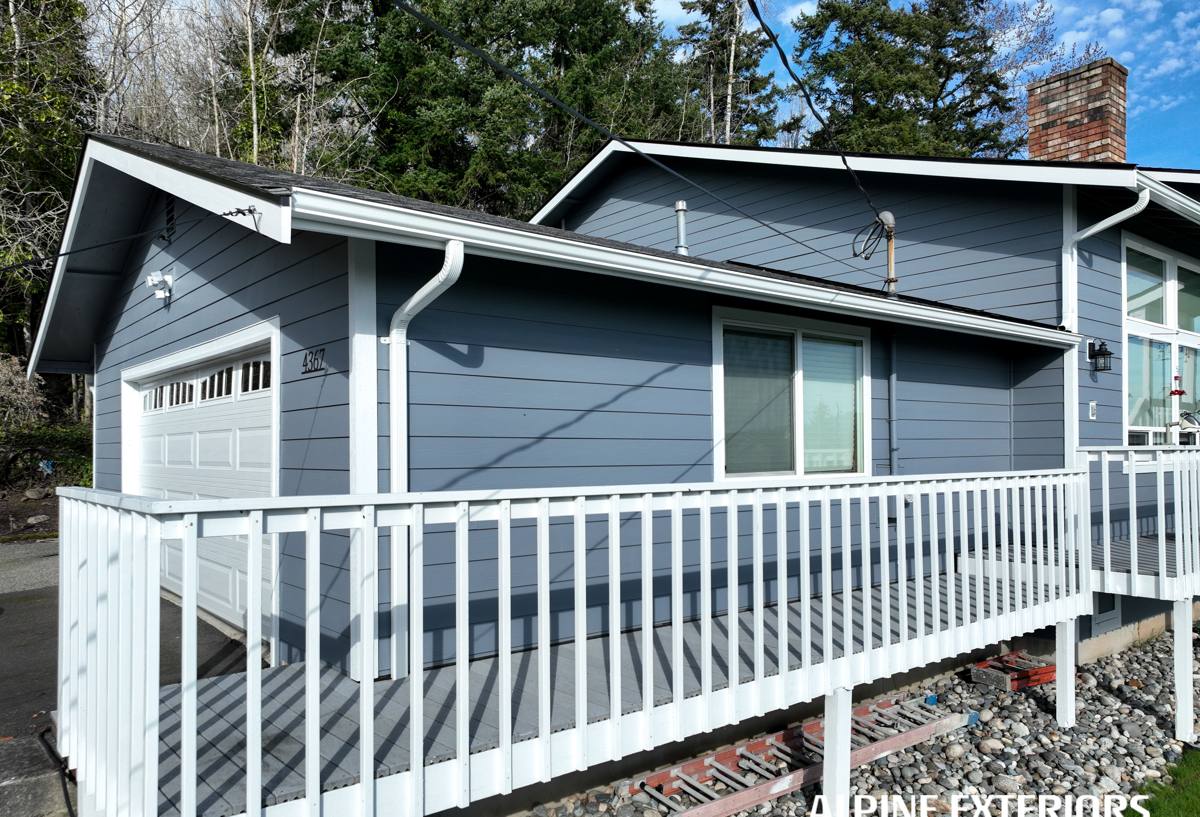
What Blaine's Climate Does to a Roof
Salt Air and Corrosion
Homes closer to the bay and harbor take a steadier dose of salt-laden air than roofs set further inland, and that salt goes to work on anything metal — nail heads, flashing, drip edge, and any exposed fasteners. Lower-grade or improperly coated hardware corrodes faster this close to the water, and once a fastener starts rusting it loses its grip on the shingle or panel it's holding down. Material and hardware grade matter more here, not less.
Driving Rain Off the Water
Storms coming off the water don't just fall straight down — wind pushes rain sideways under shingle tabs, into open valleys, and up under flashing at every wall and chimney transition. That sideways load finds gaps a careless installation leaves behind, and it's a bigger factor in Blaine than it is in towns with more tree cover or hills to break the wind. Roof penetrations — vents, skylights, chimneys — take the brunt of it.
A Long Moss Season
Mild temperatures and near-constant moisture add up to a moss season that runs most of the year on shaded or north-facing roof slopes. Moss doesn't just look bad — it holds moisture against the roofing material, works its way under shingle edges, and can lift tabs enough to let water track underneath. Roofs under tree cover, which describes a fair number of Blaine properties, see this earliest and worst.
Signs a Blaine Roof Needs Replacement, Not Just Repair
Repair makes sense when the damage is localized and the rest of the roof still has useful life left. Replacement is the honest call once the roof is failing broadly rather than in one spot. Signs worth taking seriously:
- Granules collecting in gutters or downspouts, or shingles that look bald and shiny in patches
- Curling, cupping, or cracked shingles across multiple slopes, not just one isolated area
- Moss that comes back within weeks of cleaning, especially on north-facing sections
- Soft or spongy decking felt underfoot near valleys, chimneys, or roof edges
- Staining on interior ceilings or attic sheathing, even faint or old-looking staining
- Daylight visible through the roof deck from inside the attic
- A roof approaching or past the typical service life of its material, with multiple prior repairs on record
Any one of these on its own might still be a repair. Several at once, especially on a roof already well into its expected lifespan, usually means replacement is the more honest and more economical path — patching a roof that's broadly worn out tends to cost more over a few years than doing the full job once.
What a Correct Roof Replacement Involves
Tear-Off and Deck Inspection
A full tear-off, not an overlay, is the only way to actually see the condition of the roof deck underneath. Layering new shingles over old ones traps moisture problems instead of finding them, which is a poor trade-off anywhere but a particularly bad one in a climate this wet. Once the old roofing is off, any soft, rotted, or delaminated decking gets identified and replaced before anything new goes down — this is also the point where a hidden moisture problem, if there is one, finally gets found and fixed instead of covered over again.
Underlayment and Ice/Water Protection
The underlayment is the roof's real waterproofing layer — shingles shed most of the water, but underlayment is what stands between the deck and any water that gets past them. In a climate with this much sustained rain, synthetic underlayment and self-adhering waterproof membrane at eaves, valleys, and other vulnerable spots aren't upgrades — they're baseline requirements we won't skip.
Flashing at Every Penetration
Chimneys, skylights, vent pipes, and wall-to-roof transitions are where the large majority of roof leaks actually start, not out in the open field of shingles. New flashing, properly lapped so water always sheds downward and outward, matters more in Blaine than in a drier climate because wind-driven rain actively tests every one of those joints during a storm.
Ventilation That Actually Works
A roof deck that can't breathe stays damp longer after every storm, which speeds up moss growth, shingle deterioration, and rot underneath. Balanced intake and exhaust ventilation — enough air moving in at the eaves and out at the ridge — helps the roof dry out between wet stretches instead of staying saturated through most of the year.
Corrosion-Resistant Fasteners
Given how much salt air Blaine roofs are exposed to, fastener grade isn't a place to cut corners. Hot-dip galvanized or stainless fasteners hold up longer than standard electro-galvanized hardware this close to the water, and a fastener that fails early can take shingles or panels with it.
Roofing Material Options for Blaine Homes
| Material | Moss & Algae Resistance | Salt-Air Durability | Typical Lifespan | Maintenance |
|---|---|---|---|---|
| Architectural asphalt shingle | Moderate; benefits from algae-resistant granules | Good with corrosion-resistant fasteners and flashing | 25-30 years | Periodic moss removal on shaded slopes |
| Standing seam metal | Strong; sheds moisture quickly, little surface for moss to grip | Very good with a marine-grade coating and correct fastener spec | 40-50+ years | Low; occasional inspection of seams and fasteners |
| Cedar shake | Weak without diligent upkeep; holds moisture and feeds moss | Fair; needs regular treatment and inspection | 20-30 years with upkeep | High; regular cleaning and treatment expected |
| Synthetic/composite shake | Strong; engineered to resist moisture uptake | Good | 40-50 years | Low to moderate |
These are general characteristics, not a recommendation that one material is automatically right for a given home. Roof pitch, tree cover, budget, and how the rest of the house is finished all factor into which option makes sense. What matters more than the material chosen is that it gets installed to spec, with the underlayment, flashing, and ventilation details this climate actually requires — a premium material installed carelessly won't outperform a mid-range material installed correctly.
Our Roof Replacement Process
- On-site inspection: We walk the roof and the attic, not just look from the ground, so the condition of the deck, flashing, and ventilation is assessed before any recommendation is made.
- Honest scope and estimate: We explain what we're seeing, what needs replacing versus what can stay, and give a straightforward estimate — no pressure to upsell beyond what the roof actually needs.
- Tear-off and deck repair: Old roofing comes off completely, decking gets inspected, and any compromised sections are replaced before new materials go down.
- Underlayment, flashing, and ventilation installed to spec: These get the same attention regardless of which finish material is going on top.
- Final walkthrough: We go over the finished roof with the homeowner, including basic guidance on what moss and moisture signs to watch for going forward.
Keeping a New Roof Ahead of Moss and Salt Air
A correctly installed roof still benefits from some basic upkeep in a climate like Blaine's. Keeping gutters and valleys clear so water actually drains, trimming back branches that shade a roof slope and keep it damp longer, and having moss addressed early — before it lifts shingle edges — all extend the practical life of a new roof. None of this replaces a correct installation, but it works alongside one; a well-built roof that's never maintained will still wear faster than it should, and a poorly built roof won't be saved by maintenance alone.
Cost Factors for a Blaine Roof Replacement
Roof replacement costs vary enough between homes that a real number only comes from an on-site look, but the main drivers are consistent:
- Roof size and how many stories the crew is working at
- Pitch — steeper roofs take longer and require more safety setup
- Number of valleys, penetrations, and wall transitions needing flashing
- Current decking condition and whether repair or replacement is needed underneath
- Material chosen, from architectural asphalt shingle up through metal or composite systems
- Tear-off complexity, including how many existing layers need to come off
Two homes of similar size in Blaine can land at noticeably different scopes once a crew is actually up on the roof, particularly if one has hidden deck damage from a slow leak the homeowner didn't know about. That's why we walk the roof before putting a number on the work rather than quoting from a photo or a phone call.
Why a Crew That Already Works Blaine Matters
A roofing crew that works this stretch of Whatcom County regularly has already seen how salt air, driving rain, and a long moss season play out on real Blaine roofs over full seasons, not just on a product spec sheet. That experience shapes practical decisions on tear-off day — which valleys and penetrations need extra flashing attention, which slopes stay shaded and damp longest, and which fastener grade is worth the added cost so a homeowner isn't dealing with a callback after the next storm off the water. Blaine's exposed, coastal position isn't the same as more sheltered towns further inland in the county, and a roof built without accounting for that difference tends to show it within a few wet seasons.
If your Blaine home needs a roof inspection or a full replacement, we're glad to take a look and give you a straightforward, honest assessment of what it actually needs. Reach out using the form below to schedule a free, no-pressure estimate.