 Custer
 Storm Damage Roof Repair Built for a Spit Property
Semiahmoo sits out on a narrow spit between Semiahmoo Bay and Drayton Harbor, right at the edge of Blaine near the Canadian border. There's open water on more than one side and almost nothing to break the wind before it reaches a roofline. When a storm rolls through Whatcom County, homes out here typically take a harder hit than properties set back even a mile or two inland — the wind gusts arrive with less resistance, the rain comes in sideways instead of straight down, and salt-laden air is already working on fasteners and flashing before the storm ever shows up.
That combination means storm damage repair on a Semiahmoo roof isn't quite the same job as storm damage repair somewhere more sheltered. The wind loads are higher, the corrosion risk on hardware is elevated, and moss and mildew are already established for most of the year, which changes what a roof looks like underneath once you pull back damaged shingles or panels. This page covers what storm damage actually looks like on a roof out here, what a correct repair involves, and how we approach it.
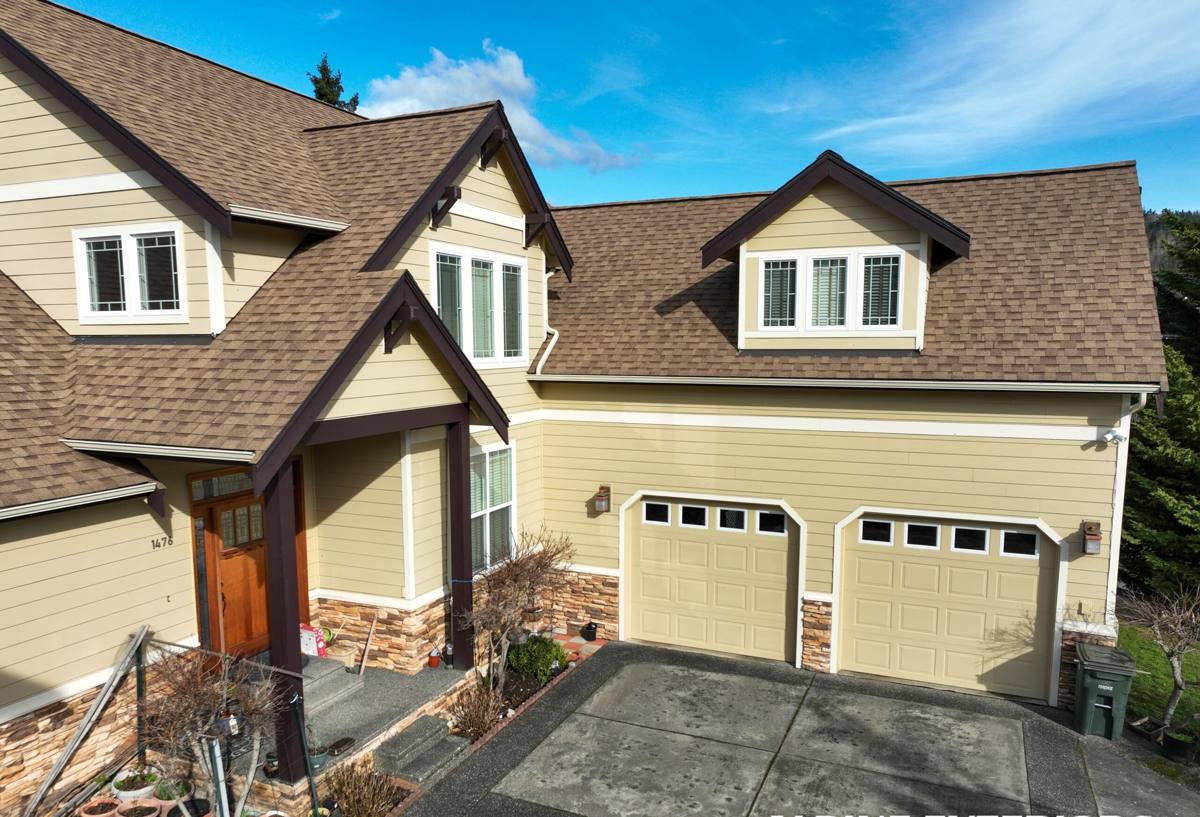
What Storms Do to Roofs on the Spit
Wind-Driven Rain That Finds the Gaps
With almost no windbreak between open water and the roofline, wind-driven rain during a storm doesn't just land on a roof — it gets pushed up under shingle tabs, into ridge vents, and sideways through any gap in flashing around chimneys, skylights, and roof-to-wall transitions. A roof that would shed water fine in a calmer setting can still take on water during a storm here simply because the wind pressure is higher than the assembly was ever tested against. This is why storm damage on a Semiahmoo roof is often more about compromised flashing and lifted shingle edges than about dramatic, obvious destruction.
Wind Uplift and Lifted or Torn Shingles
Sustained gusts off the water can get under the leading edge of a shingle and lift it, breaking the seal strip underneath even if the shingle doesn't tear off outright. Once that seal is broken, the shingle may look intact from the ground but no longer sheds water the way it's supposed to. Fully torn-off shingles and exposed felt or underlayment are the obvious damage; the lifted-but-still-there shingles are the kind that get missed without a close inspection.
Debris Impact
Branches and debris carried by storm wind can crack or puncture shingles, dent metal flashing, and knock granules loose from asphalt shingles in a way that shortens their remaining life even where there's no visible hole. On properties with mature trees nearby, debris impact is often the most concentrated damage on an otherwise sound roof.
Salt Air Accelerating Everything Afterward
Once a storm compromises a roof's protective layer — a cracked shingle, exposed fastener head, or dented flashing — the ongoing salt air on a Semiahmoo property speeds up what happens next. Bare metal corrodes faster here than a few miles inland, and any exposed wood decking starts absorbing moisture in an environment that rarely gets fully dry. Storm damage that would sit stable for weeks on an inland roof can turn into a leak faster out here simply because of the site's exposure.
A Long Moss and Mildew Season Complicating Inspection
Mild temperatures and near-constant humidity give moss and mildew a growing season that runs most of the year across this part of Whatcom County. That matters for storm repair because moss holds moisture against the roof surface and can hide small cracks, lifted shingles, or granule loss from a casual look. Any storm inspection on a Semiahmoo roof needs to account for moss cover, not just look past it.
Signs of Storm Damage Worth Getting Checked
- Shingles that look curled, cracked, or missing from the ground, especially on the side of the roof facing the water
- Granules collecting in gutters or at downspout outlets after a windstorm
- Dented, bent, or lifted flashing around chimneys, skylights, or roof-to-wall joints
- New or worsening water stains on interior ceilings or upper walls following a storm
- Visible daylight through the attic roof deck, or damp insulation near the roofline
- Debris — branches, needles, or larger material — still resting on the roof surface after the wind has died down
- Gutters pulling away from the fascia or sagging under storm debris weight
- A sudden increase in moss or dark streaking concentrated in one area, which can indicate a spot where water is sitting due to damaged flashing or a compromised shingle
What a Correct Storm Damage Repair Involves
Assessment Before Any Work Starts
We start with a full roof inspection, not just a look at the obviously damaged section. Because wind on a spit property can lift or loosen shingles well away from the most visible damage, we check the whole roof plane, not just the spot a homeowner noticed staining under. That includes checking flashing at every penetration, the ridge, and the edges, since those are the points most likely to fail first under wind-driven rain.
Matching Repair Scope to Actual Damage
Not every storm-damaged roof needs full replacement, and not every roof with a few missing shingles is fine with a patch. Part of an honest assessment is telling a homeowner which situation they're actually in. Isolated shingle damage on an otherwise sound, reasonably new roof is usually a legitimate repair. Widespread wind damage on an older roof, or damage that's exposed the deck to sustained moisture, often means repair is a short-term fix and replacement is the more honest long-term recommendation.
Flashing and Fastener Detail
Given the corrosion risk from salt air, we pay particular attention to fastener and flashing material during any storm repair here. Replacing damaged flashing with corrosion-resistant material, and re-securing loosened shingles with proper fastener placement rather than surface adhesive alone, matters more on this site than it would somewhere drier and more sheltered.
Deck and Underlayment Check
Where shingles have been missing or lifted for any length of time, we check the roof deck underneath for soft spots or moisture damage before installing new material over it. Covering a compromised deck with new shingles just hides a problem that will resurface, often as an interior leak, later on.
Repair Versus Replacement: How We Make the Call
| Factor | Points Toward Repair | Points Toward Replacement |
|---|---|---|
| Roof age | Roof is well within its expected service life | Roof is already near or past the end of its expected life |
| Damage extent | Isolated to one section or a handful of shingles | Spread across multiple roof planes or the whole roof |
| Deck condition | Deck is dry and sound where exposed | Deck shows soft spots, rot, or sustained moisture damage |
| Prior storm history | First significant storm event on this roof | Roof has taken repeated storm hits and repairs over the years |
| Insurance scope | Adjuster's scope supports a targeted repair | Adjuster's scope or damage extent supports full replacement |
Working With Insurance on Storm Claims
Most storm damage repair on a Semiahmoo roof involves an insurance claim at some point. We'll document damage with photos and a written scope that a homeowner can hand to their adjuster, and we're glad to meet an adjuster on-site if that's useful. We don't inflate scope to pad a claim, and we don't downplay legitimate damage to make a repair look smaller than it is — our job is an accurate, defensible scope, not a number picked to please either side. Coverage details, deductibles, and claim approval are between the homeowner and their insurer; we stay in our lane as the contractor documenting and doing the physical work.
Materials We Use for Roof Repair Here
For asphalt shingle roofs, we match replacement shingles to the existing roof as closely as possible in weight, color, and profile, understanding that some visible difference is normal when patching an already-weathered roof. For flashing, we use corrosion-resistant metal appropriate to a salt-air environment rather than standard-grade material that will show rust within a few seasons out here. Fasteners are chosen the same way — this isn't the site to save a few dollars on hardware that corrodes faster than the shingles around it fail.
Our Process for a Semiahmoo Storm Repair
- On-site inspection of the full roof, not just the visibly damaged area, including flashing, ridge, and edge details
- Photo documentation and a written scope, useful for both the homeowner's own records and any insurance claim
- An honest recommendation — repair or replacement — based on roof age, damage extent, and deck condition
- A clear estimate before any work begins, so there are no surprises once the tear-off starts
- Repair work using corrosion-resistant fasteners and flashing suited to a salt-air, wind-exposed site
- A final check of the completed repair against the surrounding roof, confirming shingles are properly sealed and flashing is watertight
Why Local Storm Repair Experience Matters Here
A crew that mostly works sheltered, inland roofs can still do competent work on a Semiahmoo roof, but they're more likely to miss the details that matter specifically on an exposed spit property — the flashing points most likely to fail under wind-driven rain, the corrosion risk that standard-grade fasteners don't hold up against, and the moss cover that can hide damage from a quick look. We work roofs in this part of Whatcom County regularly enough to know which parts of a storm-hit roof need the closest look first, and we bring that experience to every inspection rather than treating each roof as a blank slate.
Questions Worth Asking Any Roofing Contractor After a Storm
- Are you licensed and insured to work in Washington, and can you provide proof on request?
- Will you document damage in a way that's usable for an insurance claim?
- What's your honest read on repair versus replacement, and why?
- What fastener and flashing materials will you use, and are they suited to a salt-air site?
- Will you check the roof deck condition before covering it with new material?
- Do you have a clear, written scope and estimate before work starts?
If a recent storm has left shingles missing, flashing bent, or water stains showing up inside your home near Semiahmoo, we're glad to come take a look. Reach out below for a free, no-pressure estimate.