 Custer
 Point Roberts Windows Work Harder Than Most
Point Roberts sits on a small peninsula that catches weather most inland Whatcom County homes never see. Being surrounded on three sides by water means salt-laden air is a daily fact of life, not an occasional nuisance. That air finds its way into every gap in a window frame, working on hardware, seals, and finishes year-round. Add in driving rain that comes sideways off the Strait of Georgia during winter storms, and a moss season that can stretch from October well into spring, and you've got a climate that tests windows harder than a typical Pacific Northwest suburb.
Homes here need windows that do two jobs at once: keep heat in during the cold, wet months, and keep moisture, salt, and organic growth out year-round. A window that's only "energy efficient" on paper but fails at moisture management won't hold up long in this environment. We look at both sides of that equation on every job.
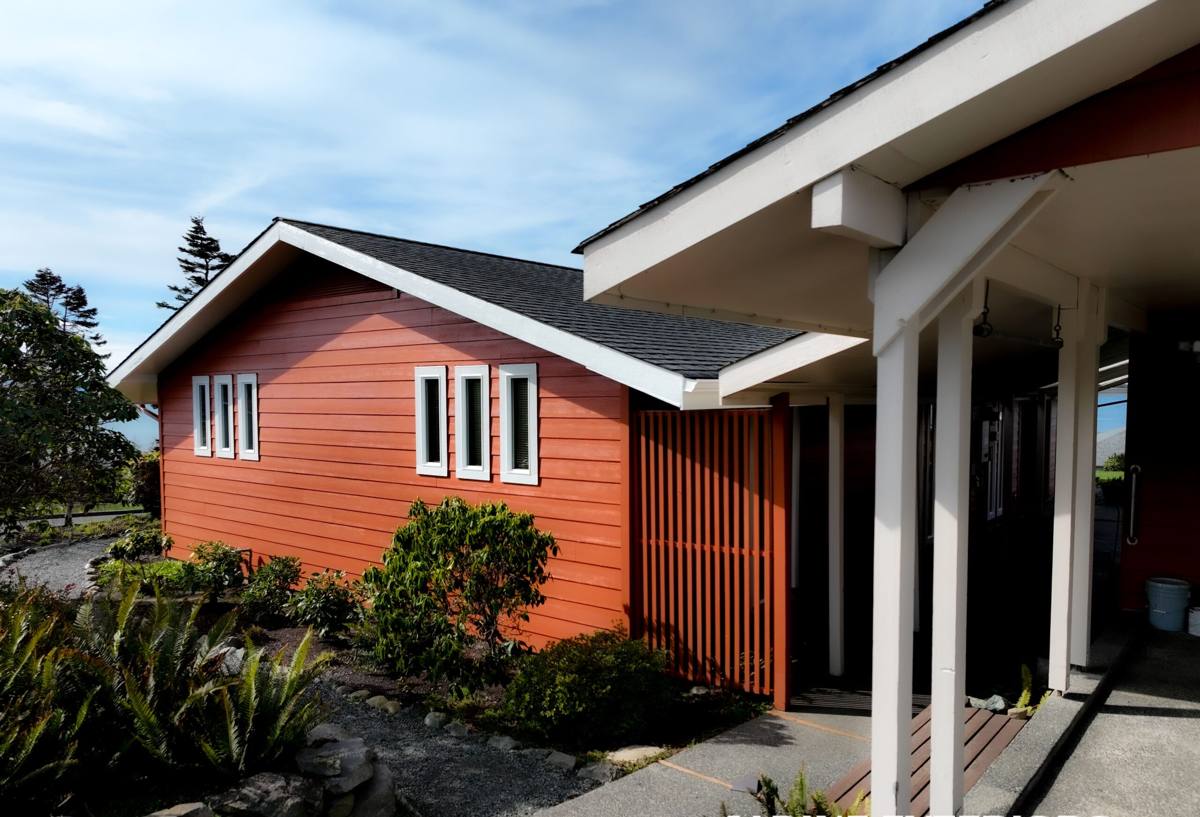
What Energy Efficiency Actually Means Here
"Energy-efficient" gets thrown around loosely in the window business. For a Point Roberts home, it should mean a specific set of measurable properties, not just a sticker on the glass.
The Numbers That Matter
- U-factor — how well the window resists heat loss. Lower is better, and it matters more here than in drier inland climates because damp air conducts heat away from a house faster.
- Solar Heat Gain Coefficient (SHGC) — how much solar heat passes through the glass. On a peninsula with plenty of overcast days, this needs to be balanced, not maxed out or minimized blindly.
- Low-E coatings — a microscopically thin layer that reflects heat while letting visible light through. Standard on any window we'd consider putting in a coastal Whatcom County home.
- Gas fill — argon or krypton between panes slows heat transfer compared to plain air. It's a small cost difference that pays for itself in comfort near drafty exterior walls.
None of these numbers mean much in isolation. What matters is how they're matched to the orientation of the house, the amount of glass on the exposed sides, and how the window is actually installed — which is where a lot of "efficient" window jobs quietly fall apart.
Signs Your Current Windows Are Costing You Money
Before talking about replacement, it's worth knowing what to look for. Not every drafty window needs full replacement, but these are the signs we take seriously on an inspection:
- Condensation forming between the panes (not on the inside surface) — this means the seal has failed and the gas fill is gone
- Visible fogging or a hazy ring around the edges of the glass
- Frames that feel cold to the touch even when the heat is running
- Soft or discolored wood at the sill, especially on the sides of the house that face prevailing wind and rain
- Moss or green staining building up in the frame corners or tracks
- Hardware that's stiff, corroded, or won't latch tight anymore
- A noticeable draft when standing near the window on a windy day
- Rooms that are harder to heat than the rest of the house, especially ones with older or larger windows
Any one of these on its own might just need a repair or reseal. Several of them together, especially on an older single-pane or early double-pane window, usually means the unit has reached the end of its useful life.
Frame Material: Why It Matters More Near Salt Water
The frame material choice matters as much as the glass package in this environment. Salt air accelerates corrosion on metal hardware and can degrade some finishes faster than a few miles inland.
| Frame Material | Coastal/Salt Air Performance | Maintenance | Typical Trade-offs |
|---|---|---|---|
| Vinyl | Doesn't corrode; handles moisture well | Low — occasional cleaning | Limited color options; can expand/contract with temperature swings |
| Fiberglass | Very stable in moisture and salt exposure | Low | Higher upfront cost than vinyl |
| Aluminum | Prone to corrosion and heat loss unless thermally broken | Moderate — watch for pitting near salt air | Generally not our first recommendation this close to the water |
| Wood / wood-clad | Needs protection from driving rain and moss growth | Higher — periodic finish upkeep | Best appearance option; requires more attention in this climate |
We don't push one material on every house. A wood-clad window can look great and perform well if it's detailed and maintained correctly, but we'll be upfront if a given exposure or budget points toward vinyl or fiberglass instead. The goal is a window that still seals and operates properly ten and twenty years from now, not just on install day.
Glass Options Worth Discussing
Double-pane with Low-E and argon gas is the standard baseline for most Point Roberts homes and performs well for the price. Triple-pane adds another layer of insulation and can be worth it on north- or west-facing walls that take the brunt of winter storms, or in rooms where comfort has been a persistent complaint — but it adds weight, cost, and isn't always necessary on every elevation of a house.
Installation Details That Actually Determine Performance
A high-performance window installed poorly will underperform a mid-grade window installed correctly. In a marine climate like this, installation quality is often the bigger variable.
What a Correct Install Includes
- Removing old flashing and building paper around the opening to check for hidden rot or moisture damage before the new window goes in
- Proper flashing sequence (window flange, tape, and house wrap layered so water sheds outward, never inward)
- Sealing the rough opening with the right sill pan or sloped sill detail so any incidental water drains out instead of pooling
- Low-expansion foam or backer rod and sealant around the frame perimeter — not just caulk smeared over gaps
- Correct shimming so the window operates square and the weep holes stay clear
- Exterior trim and caulking sized for the amount of movement and rain exposure the wall actually sees
Skipping any of these steps is how a brand-new window ends up with a soft sill or a moldy corner within a few years — not because the window itself was bad, but because water got behind it. This is the part of the job that doesn't show up in a sales brochure, and it's the part we spend the most time getting right.
Our Process for a Point Roberts Window Job
We keep the process straightforward and try to minimize disruption to the household, especially since most window jobs happen room by room while the house is occupied.
- On-site assessment — we look at each window's condition, the wall's exposure to wind and rain, and check for any hidden moisture damage before quoting anything.
- Honest recommendation — we'll tell you which windows genuinely need replacement, which can be repaired or resealed, and why, without upselling a full-house job that isn't necessary.
- Measurement and ordering — precise measurements matter more than people expect; a window that's slightly undersized or oversized for its opening creates installation problems that show up later as leaks or drafts.
- Installation — old window removal, opening inspection and repair if needed, correct flashing and sealing, then the new unit set and tested for operation.
- Cleanup and walkthrough — we clean up debris and walk through each window's operation with you before calling the job done.
Why Local Experience in Point Roberts Matters
Point Roberts is a peninsula connected to the rest of Whatcom County only by a land border crossing through Canada, which is a real logistical factor for any contractor working here — material deliveries, crew scheduling, and job-site timing all need to account for it. A crew unfamiliar with the area can lose a day just figuring out logistics that a crew already working the area plans around as a matter of course.
Beyond logistics, familiarity with how this specific stretch of coastline behaves matters. Which walls take the worst of the driving rain, how fast moss builds up in shaded corners, how quickly salt air can affect unprotected hardware — these are things you learn by working houses in this exact area repeatedly, not from a general contracting background alone. It shows up in small decisions: which sill detail to use, how much sealant redundancy to build in, which frame material to steer a homeowner toward on a particularly exposed elevation.
Getting Started
If your windows are drafty, fogged, or just old enough that you're wondering whether repair or replacement makes more sense, we're happy to take a look and give you a straight answer. There's a form below for a free, no-pressure estimate — no obligation, just an honest read on what your home actually needs.