 Custer
 Siding Built for the Nooksack Area's Weather, Not Just Any Weather
Homes in and around Nooksack sit in a stretch of Whatcom County that takes a steady beating from the elements. Marine air moving in off the Strait and Bellingham Bay carries salt that settles on exterior surfaces. Pacific storm systems bring driving rain that hits siding sideways, not just from above. And the combination of moisture, shade, and mild temperatures gives the region a moss and algae season that can run most of the year. Siding that isn't installed with this specific climate in mind will show it — fading, staining, soft spots, and premature failure show up faster here than in drier parts of the state.
This page covers what siding installation should actually involve for a Nooksack-area home, what we watch for on jobs in this part of Whatcom County, and why the installation itself matters as much as the material you choose.
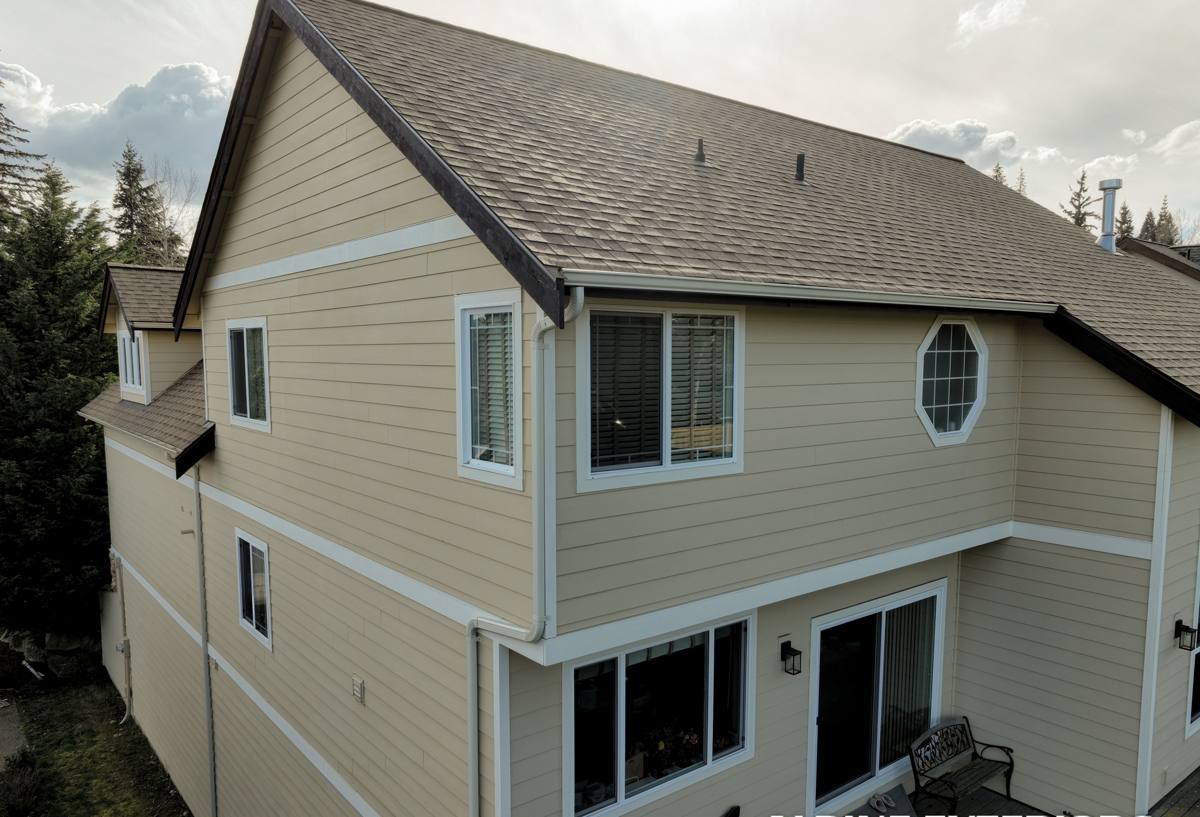
What "Correct" Installation Actually Means
Siding failures in this climate are rarely about the material being bad — they're almost always about installation shortcuts that let water in or trap moisture against the wall. A correct install isn't just nailing panels to a wall in the right pattern. It includes:
- A properly lapped weather-resistive barrier (house wrap) with no gaps, tears, or reverse laps that let water travel downward behind the siding
- Flashing at every horizontal transition — window and door heads, deck ledgers, roof-to-wall intersections, and butt joints — so water is directed out and away from the sheathing
- Correct fastener type, spacing, and penetration depth into framing, not just sheathing
- Proper clearance between the bottom of the siding and grade, decks, patios, and roof lines so splash-back and standing water don't sit against the material
- Rain screen or drainage gap detailing where the wall assembly calls for it, so any moisture that does get behind the siding has somewhere to drain and dry
Skip any one of these and you can end up with siding that looks fine from the driveway but is failing from the inside out. That's the failure mode we see most often on tear-offs in this area — not the siding material giving up, but water finding a path in years earlier through a missed flashing detail.
The Moss Problem: More Than a Cosmetic Issue
A long moss season does more than make a house look neglected. Moss and algae hold moisture against the siding surface far longer than open air would, which keeps that section of wall wet for extended stretches even between storms. On absorbent or poorly sealed materials, that constant dampness accelerates rot, delamination, and paint failure. Shaded north- and west-facing walls, areas under overhangs with poor airflow, and siding close to landscaping or tree cover are the spots we see it worst on around here.
Siding installation in this area has to account for airflow and drainage as much as it accounts for the material itself. That means keeping proper clearances from plantings, making sure the drainage plane behind the siding actually works, and choosing a material that doesn't feed moss and algae the way some products do.
Salt Air and Driving Rain
Salt-laden air corrodes exposed metal fasteners and trim over time, and driving rain pushes water into joints and seams that would stay dry in a calmer climate. This is why fastener choice, joint treatment, and caulking at trim and penetrations aren't optional details — they're the difference between siding that holds up for decades and siding that needs attention in five years.
Why We Install Only James Hardie Fiber Cement
We standardized on James Hardie fiber cement siding for every home we work on, including in Nooksack, and we don't install vinyl, LP SmartSide, Cemplank, Allura, primed spruce, or cedar. That's not a marketing position — it's a decision based on what actually holds up under salt air, driving rain, and a long moss season without turning into a maintenance project for the homeowner.
Fiber cement is non-combustible and dimensionally stable, meaning it doesn't expand, contract, warp, or cup the way wood-based products can when they cycle through wet and dry conditions repeatedly. Hardie's ColorPlus factory finish is baked on under controlled conditions rather than field-applied, which gives it better adhesion and UV resistance than a coat of paint applied on site — that matters when a wall is going to sit damp and shaded for months at a time. Hardie also engineers specific product lines (HZ5 and HZ10) for different climate zones, so the product going on the wall is matched to the moisture and temperature conditions it will actually face here, not a generic national spec.
To be fair to the alternatives: vinyl is inexpensive and low-maintenance in mild, dry climates, but it can become brittle and crack in cold snaps and doesn't hold paint if you ever want to change the color. Wood products like cedar and primed spruce have real appeal but need ongoing sealing and maintenance to resist rot in a climate this wet, and that maintenance burden falls on the homeowner year after year. LP SmartSide and other engineered wood products perform reasonably well but are still wood-based at the core, meaning moisture intrusion at a cut edge or failed seal behaves differently — and often worse — than it does with a cement-based product. Hardie's transferable warranty and long track record in wet coastal climates are why it's what we put on homes instead.
How We Approach a Job in the Nooksack Area
- Assessment: We look at the existing siding, sheathing condition, moisture history, and any trouble spots — shaded walls, low-clearance areas, past water staining — before quoting anything.
- Tear-off and sheathing check: Old siding comes off and we inspect the sheathing underneath for rot or soft spots before anything new goes on. Covering up a wet wall is how problems get worse, not better.
- Weather barrier and flashing: House wrap goes on correctly lapped, and flashing is installed at every window, door, and horizontal transition before a single piece of siding is hung.
- Hardie installation to manufacturer spec: Correct fastener spacing, panel gaps, and clearances, installed to Hardie's published installation guidelines — not shortcuts that void the warranty.
- Trim, caulking, and final detailing: The small stuff — proper caulk joints, sealed penetrations, correctly finished corners — is what keeps driving rain and salt air out over the long run.
- Final walkthrough: We go over the finished job with you before calling it done.
Material Comparison for This Climate
| Material | Moisture/Rot Resistance | Moss/Algae Resistance | Maintenance |
|---|---|---|---|
| James Hardie fiber cement | Excellent — non-combustible, dimensionally stable | Good — dense surface, factory finish resists staining | Low — occasional wash, no repainting cycle with ColorPlus |
| Vinyl | Good, but can crack/warp in temperature swings | Moderate — grooves and laps can trap grime and moss | Low, but limited repair/color options if damaged |
| Cedar / primed spruce | Fair — vulnerable to rot without diligent maintenance | Poor — organic material feeds moss and algae growth | High — regular sealing, staining, or painting required |
| Engineered wood (e.g. LP SmartSide) | Good if sealed edges hold, but wood-based core | Moderate | Moderate — edge sealing and inspection needed over time |
Cost Factors for a Nooksack-Area Project
Every home is different, but the factors that move the price on a siding job around here are fairly consistent:
| Factor | Why It Matters |
|---|---|
| Home size and wall complexity | More corners, gables, and dormers mean more cutting, flashing, and labor time |
| Existing sheathing condition | Rot or moisture damage found during tear-off adds repair scope before new siding goes on |
| Siding profile chosen | Lap, shingle, and panel styles differ in material and labor cost |
| Trim and accessory work | Fascia, soffit, and trim replacement alongside siding affects total scope |
| Access and site conditions | Tight lots, landscaping, or multi-story walls affect staging and labor time |
We'll walk through these specifics for your home directly rather than quoting off a generic price list, since the honest answer depends on what we find once we're on site.
Signs Your Current Siding Needs Attention
- Soft or spongy spots when you press on the siding, especially near the bottom courses or below windows
- Persistent moss, algae, or dark staining that returns shortly after cleaning
- Paint or finish that's peeling, bubbling, or chalking well before you'd expect a repaint cycle
- Visible gaps, warping, or cupping at panel edges and seams
- Water stains or damp spots on interior walls that back up to exterior siding
- Fastener corrosion or streaking running down from nail heads or trim screws
Why a Crew That Already Works This Area Matters
Siding installation done to spec in a dry, mild climate can get away with more shortcuts than the same job done wrong here. A crew that regularly works Whatcom County's coastal-influenced weather already knows where moisture tends to collect on a given wall orientation, how much clearance to leave near grade and landscaping, and which flashing details actually matter in driving rain versus which ones are just checkbox items elsewhere. That local pattern recognition is hard to replace with a generic national install crew that hasn't worked this specific mix of salt air, rain, and shade before.
If you're weighing a siding project for a home in the Nooksack area, we're happy to take a look and give you a straightforward assessment of what your walls actually need — no pressure, no upsell into a product we don't stand behind. Reach out for a free estimate using the form below.