 Custer
 Ferndale's Climate Is Harder on Siding Than It Looks
Ferndale sits close enough to the water and to the open farmland of Whatcom County that homes here take a different kind of weathering than siding installed further inland. Salt-laden air off the Strait and Bellingham Bay works its way into fastener heads and seams. Driving rain, pushed sideways by wind off the water, finds every gap in a poorly lapped installation. And the long, gray moss season that runs from fall through spring keeps north-facing walls and shaded elevations damp for months at a time. None of that is exotic weather — it's just steady, patient wear — but it means siding installed to a generic national standard often underperforms here within a decade.
A siding installation done right for Ferndale isn't fundamentally different in materials from one done right anywhere else. What changes is the attention paid to water management details that matter more in this climate: flashing laps, drainage paths, fastener corrosion resistance, and how much moisture the wall assembly can tolerate before it becomes a problem. That's the lens we bring to every Ferndale project.
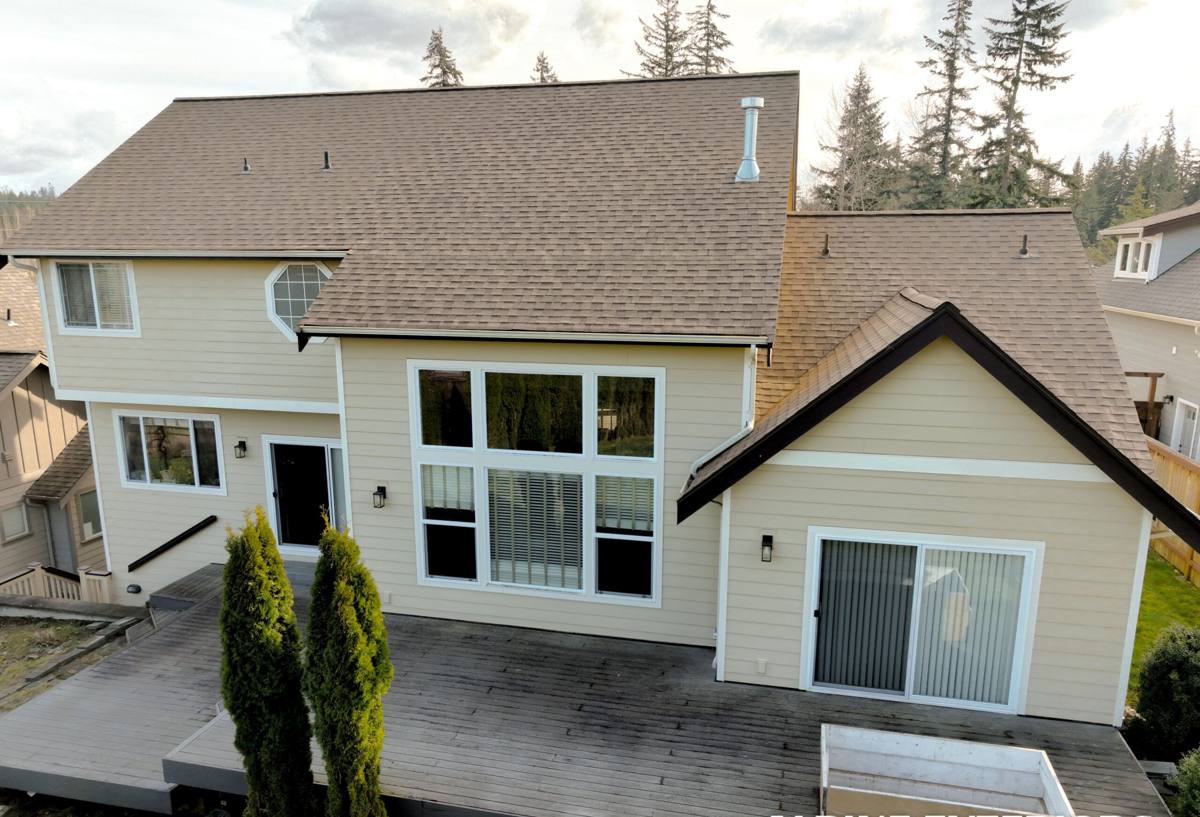
What a Correct Siding Installation Actually Involves
Siding installation is often talked about like it's just cladding — panels or planks nailed to a wall. In practice, the siding itself is the last and least important layer for keeping water out. The assembly underneath it does most of the real work, and it's where most installation failures actually start.
The Water-Resistive Barrier
Every wall needs a continuous water-resistive barrier (housewrap or building paper) installed with proper overlaps, taped seams, and correctly integrated flashing at every window, door, and penetration. In a driving-rain climate like Whatcom County's, gaps or reversed laps here are the single most common cause of hidden rot behind siding that looks fine from the curb.
A Drainage Gap
A rainscreen gap — even a thin one created with furring strips or a drainage mat — gives any moisture that gets behind the siding a way to drain and dry out instead of sitting against the wall sheathing. This matters more in a region with a long wet season than it does in a dry climate, where walls get long stretches to dry between storms.
Flashing at Every Transition
Windows, doors, decks, roof-to-wall intersections, and anywhere trim meets siding are the highest-risk points on the building. Correct flashing directs water outward and downward at every one of these transitions, lapped so that each piece sheds onto the one below it.
Fastening to Spec
Fiber cement siding has manufacturer-specified nailing patterns, fastener types, and minimum embedment. Corrosion-resistant fasteners matter everywhere, but especially near the water where salt air accelerates corrosion of the wrong hardware.
Proper Clearances
Siding needs to stop short of grade, roofing, decks, and patios by the manufacturer's minimum clearance so it never sits in standing water or gets constant splash-back — a common source of premature edge swelling on any siding product, fiber cement included.
Why We Only Install James Hardie Fiber Cement
We install James Hardie fiber cement siding exclusively. We don't install vinyl, LP SmartSide, Cemplank, Allura, primed spruce, or cedar, and that's a deliberate standard, not a lack of options.
Vinyl is inexpensive and low-maintenance in mild climates, but it's a thin, flexible material that expands and contracts with temperature swings, can crack in impacts, and offers limited color depth since it's colored through a thin extrusion rather than factory-baked. Wood — cedar or primed spruce — looks great when new and can be beautiful when meticulously maintained, but it demands a repainting and caulking cycle that most homeowners underestimate, and it's the most vulnerable of the common siding materials to the kind of sustained dampness Whatcom County's moss season produces. Other fiber cement brands (Cemplank, Allura) are legitimate competitors to Hardie on paper, but we've standardized on one manufacturer so our crews install one system, know its details cold, and can back a single, consistent warranty rather than juggling installation specs across several products.
James Hardie fiber cement is non-combustible, dimensionally stable across our wet winters and warm summers, and finished at the factory with ColorPlus Technology — a baked-on finish that resists fading and chipping far better than field-applied paint. Hardie also engineers specific product lines (the HZ5 line) for climates like ours, with formulations aimed at moisture and freeze-thaw performance rather than a one-size-fits-all product. The warranty is transferable, which matters to homeowners in a market where houses change hands.
Comparing Common Siding Materials
| Material | Moisture Behavior | Maintenance Cycle | Typical Weak Point Locally |
|---|---|---|---|
| Vinyl | Doesn't absorb water, but seams and edges can let water behind it | Low, but cracks/fades over time | Warping in temperature swings, brittle in impacts |
| Cedar / primed spruce | Absorbs moisture; needs consistent coating to shed water | High — repaint/reseal every few years | Rot and moss growth in shaded, damp areas |
| Other fiber cement (Cemplank, Allura) | Similar to Hardie when installed correctly | Low | Factory finish quality and warranty terms vary by brand |
| James Hardie fiber cement | Dimensionally stable, engineered moisture resistance (HZ5) | Low | Performance depends heavily on correct installation |
Our Process, Start to Finish
The process is straightforward, but we don't skip steps to move faster.
- Free on-site estimate: we walk the exterior, check existing siding and trim condition, and note any problem areas (shaded walls, moss buildup, past water intrusion).
- Detailed scope and product selection: we help you choose the right Hardie profile, plank width, and color for the home.
- Tear-off and sheathing inspection: once old siding is off, we inspect sheathing for hidden rot before anything new goes up — this is where problems from a prior installation usually surface.
- Water-resistive barrier and flashing installation: housewrap, flashing at every opening, and drainage details go in before a single piece of siding is hung.
- Siding and trim installation to Hardie's fastening and clearance specifications.
- Final walkthrough: we review the finished work with you and confirm caulking, paint touch-up at cut ends, and clearances are correct.
Signs Ferndale Homeowners Should Watch For
A lot of siding trouble in this area develops slowly and gets dismissed as cosmetic until it isn't. A few patterns we see regularly on Whatcom County homes:
- Persistent moss or dark streaking on north- and west-facing walls that stays damp longer than the rest of the house
- Soft or spongy spots near the bottom courses, close to grade or decks
- Caulk that's cracked or pulled away at window and door trim
- Visible warping, bowing, or gapping at panel seams
- Paint or finish that's chalking or peeling well before you'd expect based on age
- Rust staining running down from fastener heads
Any one of these can be minor. Several together, especially on a wall that faces prevailing weather, usually means water has been getting behind the siding for a while.
What Affects the Cost of a Ferndale Siding Project
| Factor | Why It Matters |
|---|---|
| Home size and wall complexity | More corners, dormers, and trim details mean more cutting, flashing, and labor time |
| Existing wall condition | Rotten sheathing found during tear-off adds repair scope before siding can go on |
| Siding profile and finish | Lap width, shingle-style panels, and premium ColorPlus finishes vary in material cost |
| Trim and accessory scope | Corner boards, window trim, and fascia work are often bundled with a siding project |
| Access and site conditions | Multi-story sections, tight lot lines, or landscaping can add setup time |
We give a firm, itemized quote after the on-site walkthrough rather than a rough phone estimate — siding pricing depends too much on wall condition to quote sight unseen.
What to Expect During the Job
- A firm start date and a realistic timeline based on home size and weather windows
- Daily cleanup of debris and old siding removed each day, not left piled at the end
- Protection for landscaping, walkways, and windows near the work area
- Clear communication if hidden sheathing damage is found during tear-off, with a written change order before any additional work proceeds
- A final walkthrough before we consider the job complete
Why Hiring a Crew That Already Works in Ferndale Matters
Siding installation isn't a one-size-fits-all trade. A crew that works across Whatcom County regularly runs into the same wall conditions Ferndale homes present — shaded, moss-prone elevations, wind-driven rain exposure, and the corrosion issues that come with proximity to salt air. That familiarity shows up in small decisions: which walls get extra attention to flashing, which fastener finishes hold up, and where drainage details can't be shortcut. It also means a contractor who's already local, easy to reach for a warranty question years down the road, and not learning the region's quirks on your house for the first time.
If your Ferndale home needs new siding, or you want a second opinion on whether an installation was done correctly, we're happy to take a look. Reach out for a free, no-pressure estimate — we'll walk the exterior with you and give you a straight answer, whether that's a full replacement, a repair, or just a few things to keep an eye on.